
Finding Your Way Back to Yourself: Maria Ollero on Mindfulness, Neuroscience and Equine Coaching
After a brain injury left the right side of her body completely numb, Maria Ollero embarked on a deeply personal journey to understand healing, reconnect with herself and rebuild her wellbeing. What began as a search for answers became a new sense of purpose: helping others transform their relationship with their thoughts, emotions and bodies through mindfulness, neuroscience and equine coaching.

Sometimes, finding your way forward means reconnecting with the person you were before life got in the way. For Maria Ollero, Founder and Lead Coach, a brain injury became an unexpected turning point, prompting her to rediscover her connection with nature, explore holistic healing and develop a deeper understanding of the relationship between the mind and body. What began as a personal journey towards recovery gradually evolved into a professional calling, bringing together mindfulness, applied neuroscience and equine-assisted coaching.
Today, Maria uses these three complementary approaches to help individuals understand their emotional patterns, regulate their nervous systems and recognise the beliefs that may be holding them back. Through her work with horses, she also offers a different perspective on self-awareness, using the animals' sensitivity and presence to encourage people to explore their own thoughts and behaviours.
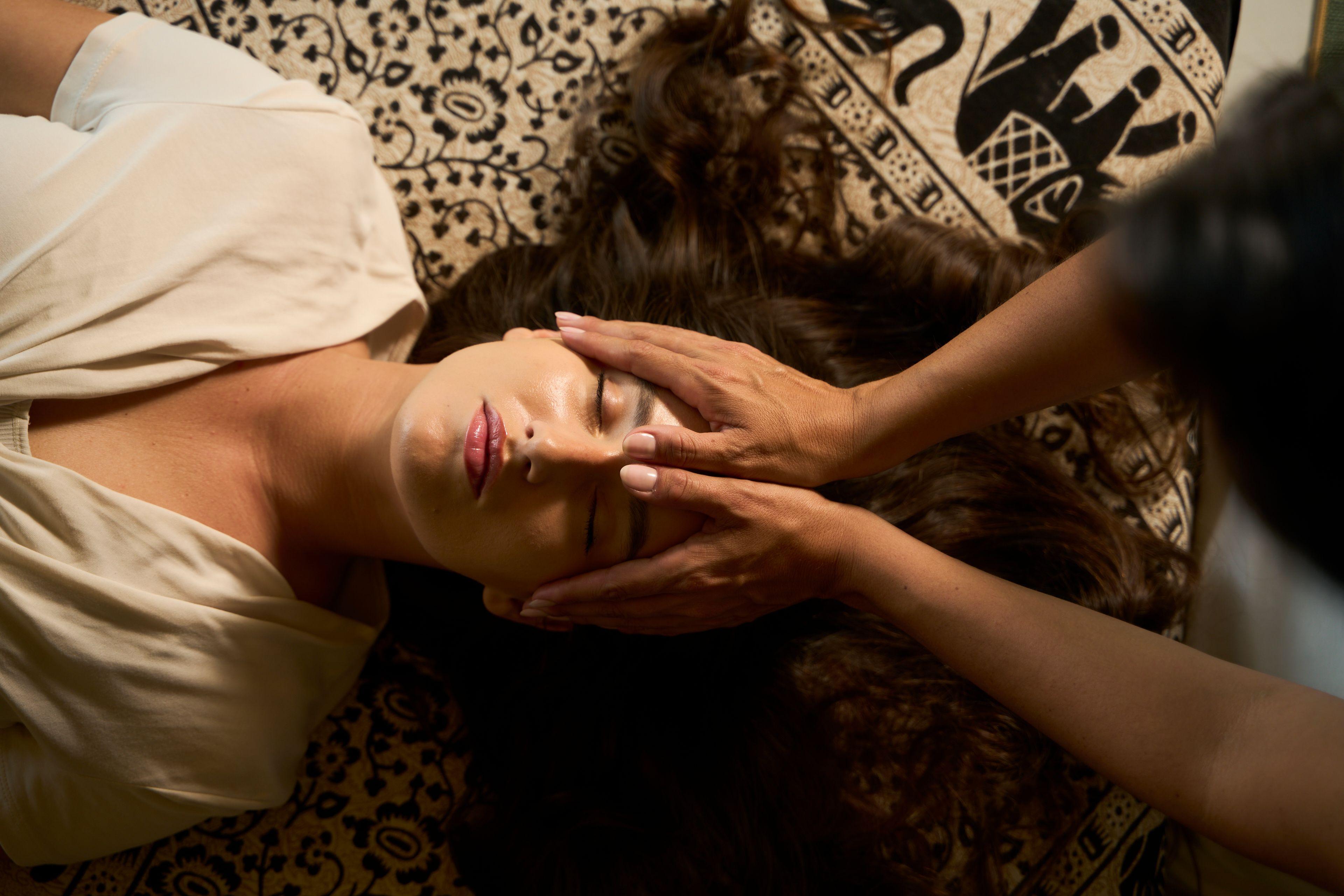
In this exclusive interview, she reflects on the lessons that shaped her journey, explains how chronic stress affects our physical and emotional wellbeing, and shares why meaningful change begins with awareness, consistency and learning to reconnect with ourselves.
1. Your journey into wellness began with a significant personal turning point. How do you think the brain injury you experienced reshaped your understanding of health and wellbeing?
I was born in Menorca, in a beautiful natural environment, and I was very connected to nature, my inner world and holistic practices through my parents. After university, when I entered working life and started wanting to achieve bigger positions, I completely forgot about that part of myself.
In 2019 a brain injury brought me back to it. It was like a cold shower, almost like a slap in the face, saying, "Hey, what are you doing? You're heading in a direction that's taking your body towards a very limited space."
It really reconnected me with myself in a very organic and beautiful way. It reminded me of everything I was when I was younger, before we become adults and get caught up in the material world.

2. You combine applied neuroscience, mindfulness and coaching with horses in your work. How do you think these three approaches complement one another?
It all started with mindfulness. Under that umbrella, I originally explored energy healing and Reiki, as well as what I now call body awareness. These were the practices I studied and used on myself after the brain injury.
I practised religiously every day. I would sit with myself, go through my energy centres and focus on aligning my body. At the time, I didn't really know what I was doing. I just knew that it felt so good and that's why I kept going.
The brain injury had left me unable to feel the right side of my body, it was completely numb. The call I had to explore energy healing in addition to conventional medicine, gave me results immediately, I began recovering physically as well as emotionally. It had also led to anxiety, panic attacks, phobias and many other challenges. I couldn't sleep or rest properly, but the energy healing helped me overcome these difficulties.
What I always say is that I didn't simply recover from the injury; I became a new person because I had reconnected with my body and started listening to it. I was following my gut instinct, even when it came to food. My body wanted vegetables rather than meat or fish, and I was really following what it needed, si I became vegan for over 8 months.
Before the brain injury, I would go to the doctor almost every month. My immune system was very weak, and I was also on an emotional rollercoaster. After the injury and my recovery journey, I began to see myself as a happier and healthier version of myself. The people around me noticed the changes and started asking me to share what I was doing.
That's how I started working with other people. Originally, I never intended to work with people; I was doing everything for myself. But eventually, I started offering energy healing to others.
Then, in 2020, during a flight from Madrid to Dubai, I had an extraordinary vision that I needed to do energy healing for horses. The moment I landed, I received a message from a friend telling me that someone had a horse rescue centre in Abu Dhabi and needed help. I said, "Well, I can offer energy healing for the horses."
I had loved horses all my life, although I didn't own any and didn't really know how to handle them. Still, I followed that strong sense of connection and started practising. Over time, I developed my own method of working with horses, which you could describe as Reiki or energy healing for horses.

As I wanted to understand horses better, I also studied Horse-Guided Empowerment, which is the coaching certification I now have and through which I help people with the support of horses.
On a later stage, I discovered Dr Joe Dispenza's work, i studied his books, went to his retreats and eventually learned about his applied neuroscience training, Change Your Mind, Create New Results. Given my corporate background, I understood that more sceptical people needed a different language and a scientific explanation. Dr Joe's teachings completely blew my mind because they explained what I had been doing with my body and how everything worked at a biochemical level. Eventually, I was approved as an NCS consultant, and since 2025 I can teach part of his work.
All three approaches come together because they represent the three branches that helped me personally and that I now use to help others. Mindfulness allows us to connect with our bodies and understand the relationship between mind and body. Horses provide an embodied, sensory experience that allows people to experience changes in the moment. Neuroscience provides the language and understanding behind it all. The human mind often needs logic to understand what is happening.
3. Nervous system regulation has become increasingly important in the wellness industry. What happens in the body when we're in a prolonged state of stress, and why is learning to regulate the nervous system so important for our emotional and physical wellbeing?
This is actually at the core of the teachings I offer. When we experience chronic stress, our autonomic nervous system response becomes activated. It signals to our body that we are in danger and prepares us to run, fight or hide.
To do this, it pumps more blood towards the extremities, slows down digestive activity, dilate the pupils and increases our respiratory rate. Essentially, our body doesn't know whether the threat is a lion trying to eat us, our boss, our husband or a difficult situation. It responds in the same way.
What happens is that we take our body out of homeostasis, which is its state of chemical balance. The hormonal centres release different hormones, for example the adrenal glands produce more cortisol and adrenaline, making us feel alert, active and ready to respond to the perceived threat.
This response is useful in a moment of stress, when we need to take action or protect ourselves. However, chronic or continuous stress can eventually lead to illness. We don't realise how many people live in a state of chronic stress every day. Some even become addicted to stress hormones and the rush of adrenaline they experience when they get angry or encounter a problem at work.
The only way to break this cycle is to become aware that we are not in a normal state, but rather an altered state of body and mind. From there, we can start bringing ourselves back into balance through different self-regulation techniques.
For example, when we practise breathing exercises, we help regulate our heart rate. Breathing gradually slows it down, and as the heart begins to enter a state of coherence, it signals the body to calm down.
As a result, we start to reduce the production of stress hormones and interrupt the cycle of thoughts and emotions that keep us in a state of stress. We can slow down negative, anxious or angry thoughts and begin to experience a greater sense of balance.
Breathing, meditation, focusing on different things and practising a body scan are all techniques that can help. They calm the body, slow down brainwaves and heart rate, and help us communicate to the body that we are safe. In a nutshell, that's what self-regulation techniques do for the nervous system.
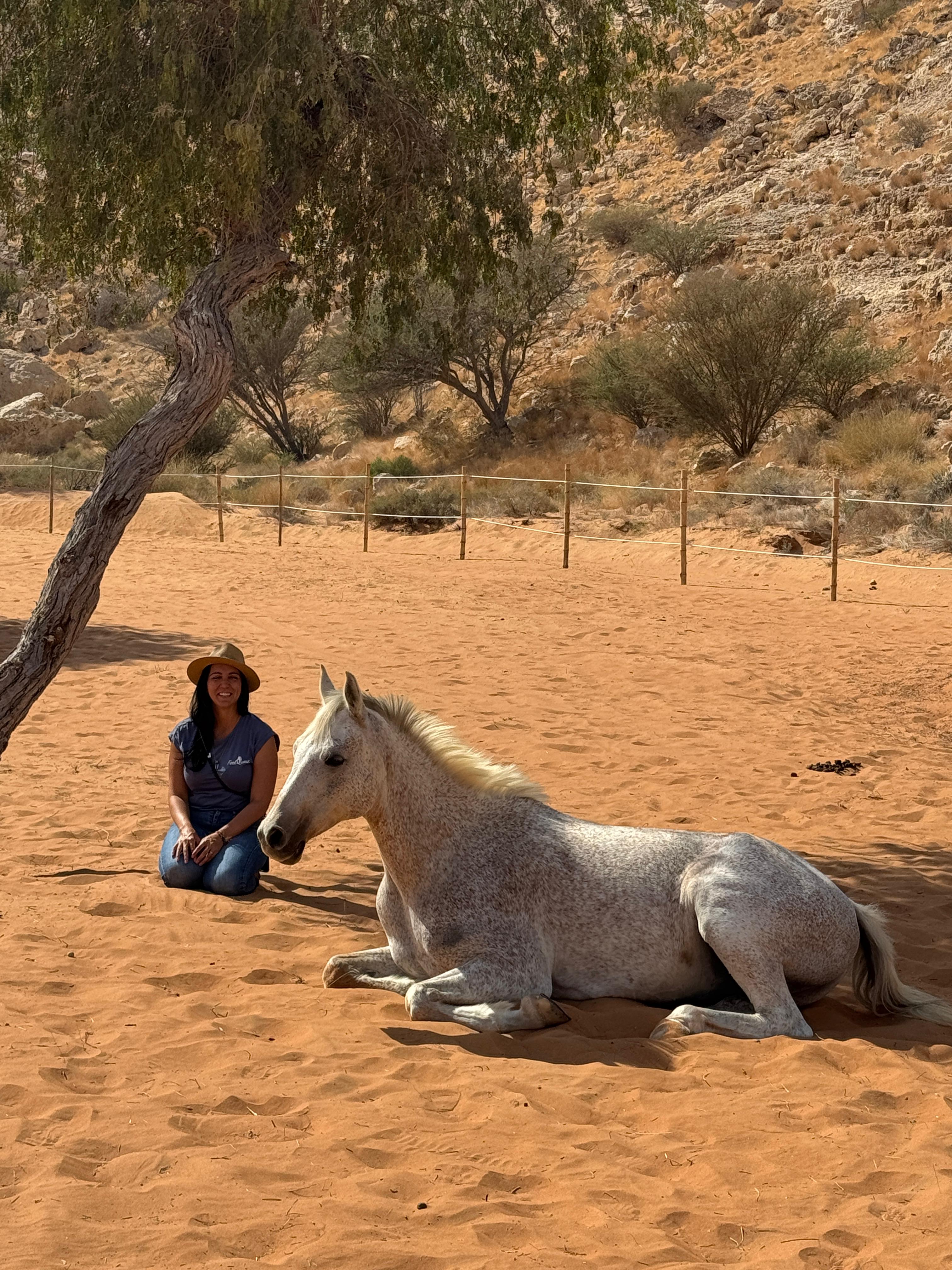
4. Equine-assisted coaching is a very distinctive element of your work. What makes horses such powerful partners in self-awareness and emotional development? How can interacting with an animal help people recognise behaviours or emotional patterns they may not notice in everyday life?
Horses are a very special element of the work I do. There is something extraordinary about having an animal weighing an average of 500 kilograms beside you. It's incredibly grounding.
The method I use is called Horse-Guided Empowerment. The word empowerment is important because we help people find their own answers to the things they want to change.
Horses are prey animals in nature, whereas humans are predators. They are constantly scanning their environment for potential threats, and their senses are highly developed. They have something to teach us about grounding, presence, stillness and connecting with something that goes beyond the human mind.
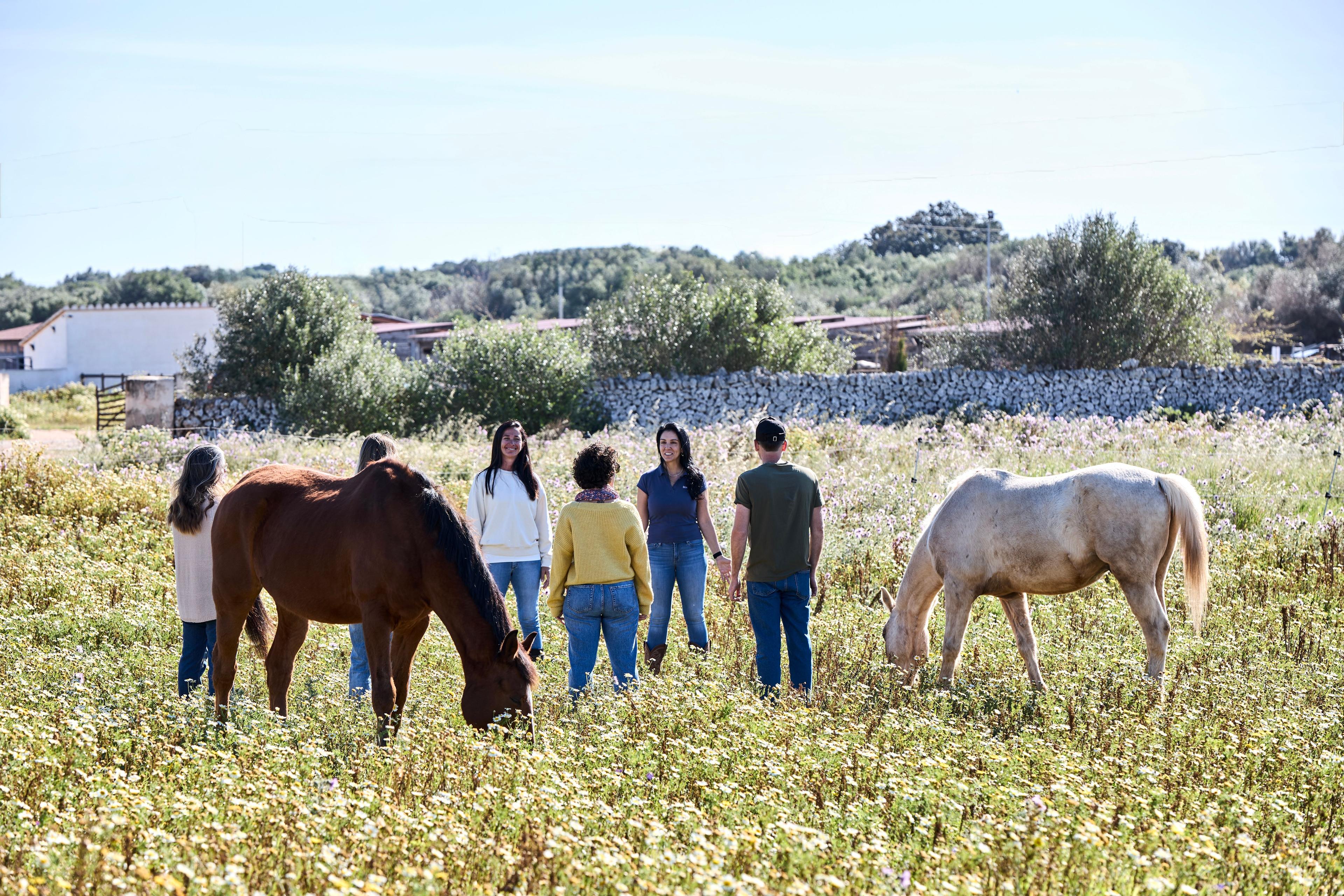
That's exactly how we work with horses. They become our partners. We work with them from the ground; we don't ride them with our clients. Instead, we become part of the herd by learning to be more like them. This means being present, grounded and connected to the here and now.
They are incredibly present animals. Every shift in our thoughts, feelings or intentions is something they can sense. They can detect changes in our heart rate and smell changes in our body chemistry. In that sense, they respond to our internal state.
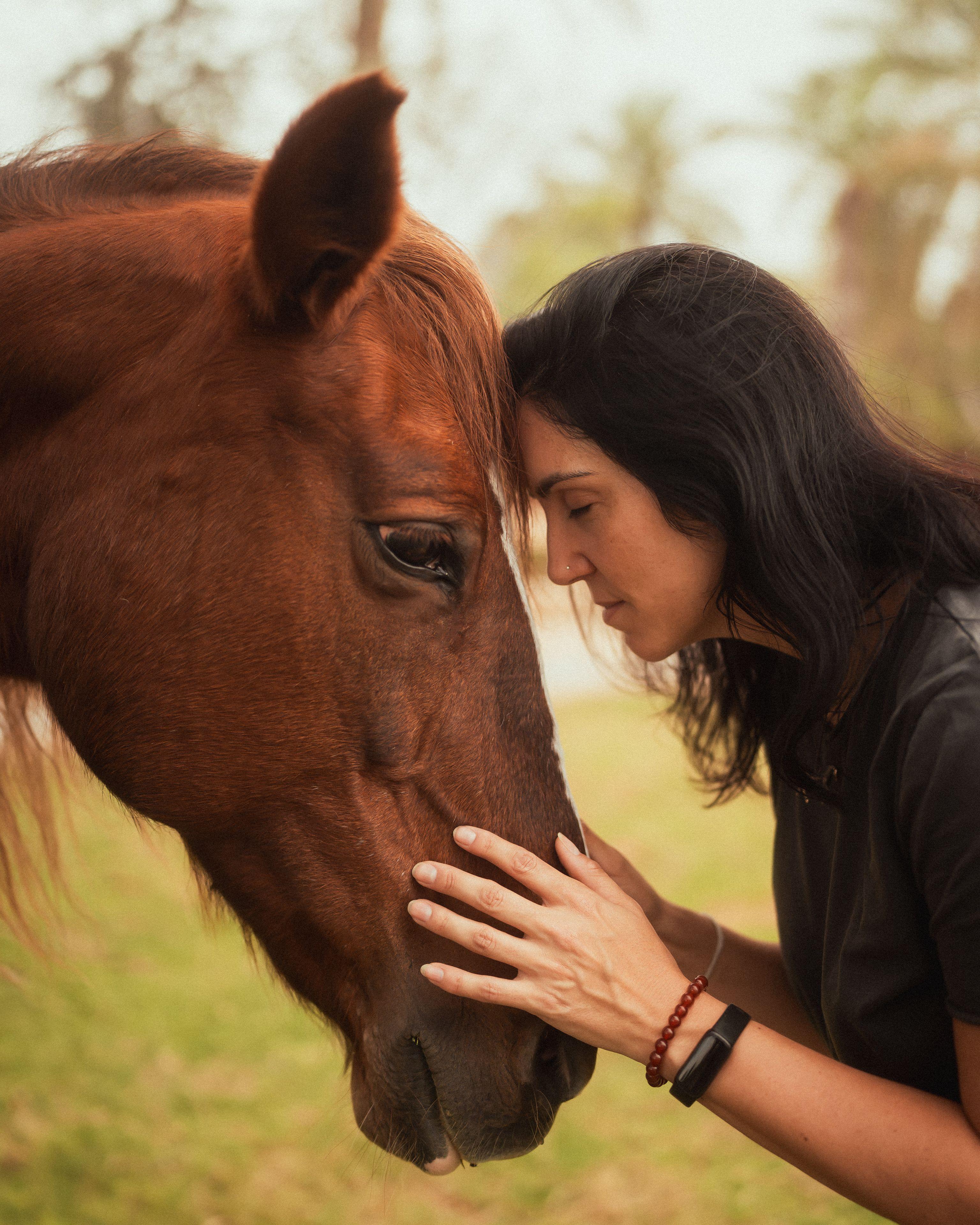
My job is to take people on a journey with the horses, working on the emotions, states of mind and thoughts that may be limiting them in their everyday lives.
Let's say you want to change your job but feel very afraid of taking that step. I would bring you into the space with the horses and begin with a guided meditation. The horses are free to move around you, allowing you to become more grounded and present.
After that, we start talking about the situation that is limiting you. My role is to observe the horses and ask questions, but the person who provides the answers is the client. For example, the client might say, "Oh, the horse is walking away. Why is he walking away? He doesn't like me."
Then I might ask, "Why do you think the horse doesn't like you?" We start exploring these thoughts. The way a person interprets the horse's behaviour often reflects how they feel and experience their own lives. Perhaps they feel that people don't like having them around or that they are somehow less than others.
My job is to help them understand that perhaps the horse simply chose to walk away. It doesn't necessarily mean anything about them. As we continue, different thoughts and emotions begin to emerge, and the person starts recognising that some of the beliefs they hold don't necessarily have to be true.
That's the basic dynamic of the work. The way I work with horses is always customised depending on the client, the group, the session and how both the horses and the person are feeling that day.
For example, I offer the Argulut journey where people work with me for a minimum of six sessions. We might be working on stress management, anxiety or anger. However, if you arrive feeling extremely anxious or overwhelmed, what you need that day is self-regulation. I might guide you into a meditative state, practise coherence breathing with the horses or go for a walk with them around the centre.
Everything adapts to the person because I believe life should work that way. We should also be able to adapt within therapeutic environments and holistic therapies.
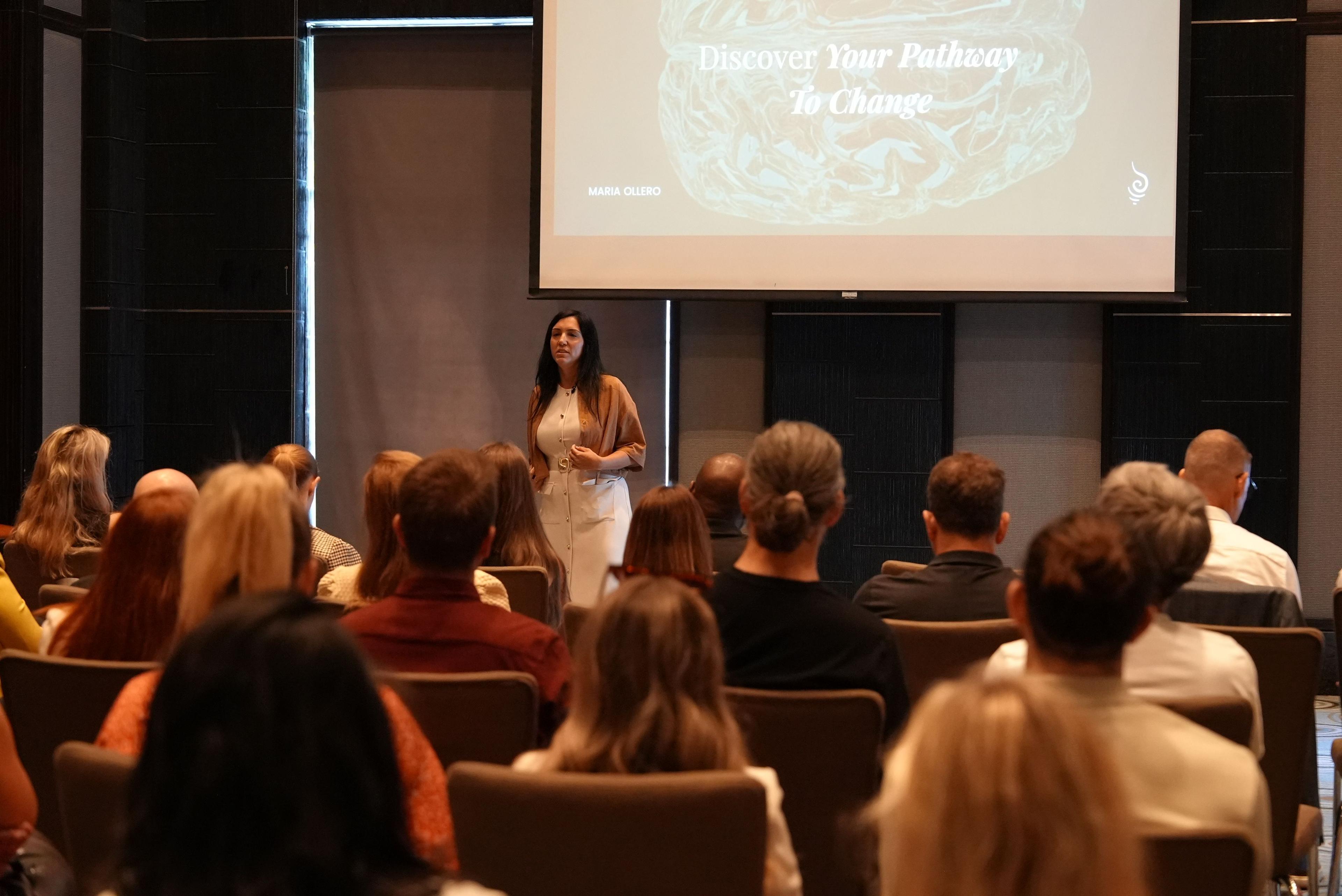
5. There is growing interest in the relationship between neuroscience and personal transformation. How does our brain learn and reinforce habitual behaviours, emotional responses and beliefs? What does science tell us about our ability to create new patterns at different stages in our lives?
The brain is one of the most extraordinary organs we have. We are still studying it because there is so much we don't yet understand. What we are increasingly understanding is how deeply connected our brain is to our physical body.
To explain this in simple terms, imagine that everything you experience creates a neurological connection. Every time you think, believe something or experience something in your life, you create a cluster of neurons associated with that understanding. The more you think about a particular idea, the more you reinforce that cluster of neurons and the belief associated with it.
For example, let's say I believe I'm not good enough. If I repeat that thought every day, I'm reinforcing that connection and strengthening that belief. Neurons are very social. They really like to connect.
The neocortex communicates with the limbic brain, which then communicates with the body through the hormonal centres. Thinking something and feeling something are two different things. The brain instructs the body to feel a particular way.
We then enter this loop of thinking and feeling. The more you feel that you're not good enough, the more you think that you're not good enough. This can become a vicious circle that is very difficult to break.
Some people stay in that state for weeks, months or even years, until that thought becomes who they are. An idea they originally created in their mind eventually becomes part of who they are at a chemical level. The body starts feeling it before the mind even thinks about it.
In Dr Joe's work, we talk about the three brains: the neocortex, the limbic brain and the cerebellum. The cerebellum acts like a microprocessor where habits and automatic behaviours are installed. This is helpful for things such as brushing our teeth or driving a car, but humans also create loops of reacting and behaving that come from limiting thoughts.
Understanding how the brain and body work is extremely important. I wish future generations could learn these things at school because we experience all sorts of traumas, and I wish we understood better what we're doing to our brains and bodies and, most importantly, that we can change it.
Of course, it's difficult; otherwise, everybody would change easily. Change requires you to show up every day and remain consistent. You need a new piece of information and you need to learn something new. That's why learning is so important. You learn how the brain works, and suddenly you think, "Ah, okay, now I can apply this to my life."
Many people don't realise that a lot of their beliefs come from the way they were raised, where they grew up, their families and the traumas they've experienced. They might think, "This is just how I am", but that's not necessarily true. At some point, you developed the belief that this is who you are, but it doesn't mean you have to remain that way.
We call this metacognition. As humans, we have the ability to look at what we've done, observe our behaviours and understand how we can change them. It's about becoming aware of what we want to change without analysing ourselves too much.
The only way to do this is by stopping these loops every day. If you struggle with anger, for example, you have to stop yourself in those moments rather than immediately reacting. You need to break that addiction to anger. The more you interrupt that response, the more you give your body and mind a different set of thoughts and feelings. Slowly, you change the programme.
With Dr Joe's work, meditation is ultimately the tool we use to teach people how to mentally rehearse a future in which they think and feel differently. This allows them to return to their everyday lives and start behaving and feeling differently, creating long-lasting change.
6. How does emotional self-awareness influence the way we communicate, make decisions and lead others? Why should emotional wellbeing be considered an essential part of effective leadership?
This is very important, particularly when we consider what I've just explained. Anger, for example, is something I see a lot in the corporate environment. Imagine you're angry and someone comes to you with a project that isn't quite right. You might immediately enter that cycle of anger: "No, but I told you not to do it like this! Now you're wasting my time!"
The longer this person has been living with anger, the more deeply ingrained those thoughts and feelings become. Meanwhile, the person who has worked hard on the project is simply hoping to have a manager who understands them and can explain how to make things better.
If you're being driven by a set of limiting programmes, you're going to be defined by them. You won't be able to become an empathetic leader, a kind leader or someone who helps others thrive and grow. You're constantly operating from limiting emotions and putting unnecessary stress on the people around you.
This doesn't only happen in the workplace. You have a bad day at work, and then another one, and you start using these experiences as excuses to justify why you behave this way. You go home feeling angry, and then you become angry with your children. This is how the cycle continues.
In a corporate organisation, if you have leaders with their own limiting beliefs, it's very difficult to build a healthy ecosystem and a positive company culture. That's why we teach Dr Joe's work to corporations. We want individuals to understand how they can become better versions of themselves so they can contribute to creating a healthier workplace culture.
Every time one of these emotions starts to take over, you need to stop yourself and question it. You don't have to believe every limiting thought. You can learn to overcome it.
Emotional self-regulation in the corporate environment is extremely important. If companies gradually introduced self-regulation tools, even something as simple as five minutes of breathing or visualising the week ahead, it could make a real difference.
I've developed and delivered mindfulness programmes for companies, where I guide people through these practices together. Naturally, some people aren't comfortable with it, but others are much more receptive. As long as some people start experiencing the benefits and feeling better, things gradually begin to change. At the end of the day, everybody wants to feel good in their lives.
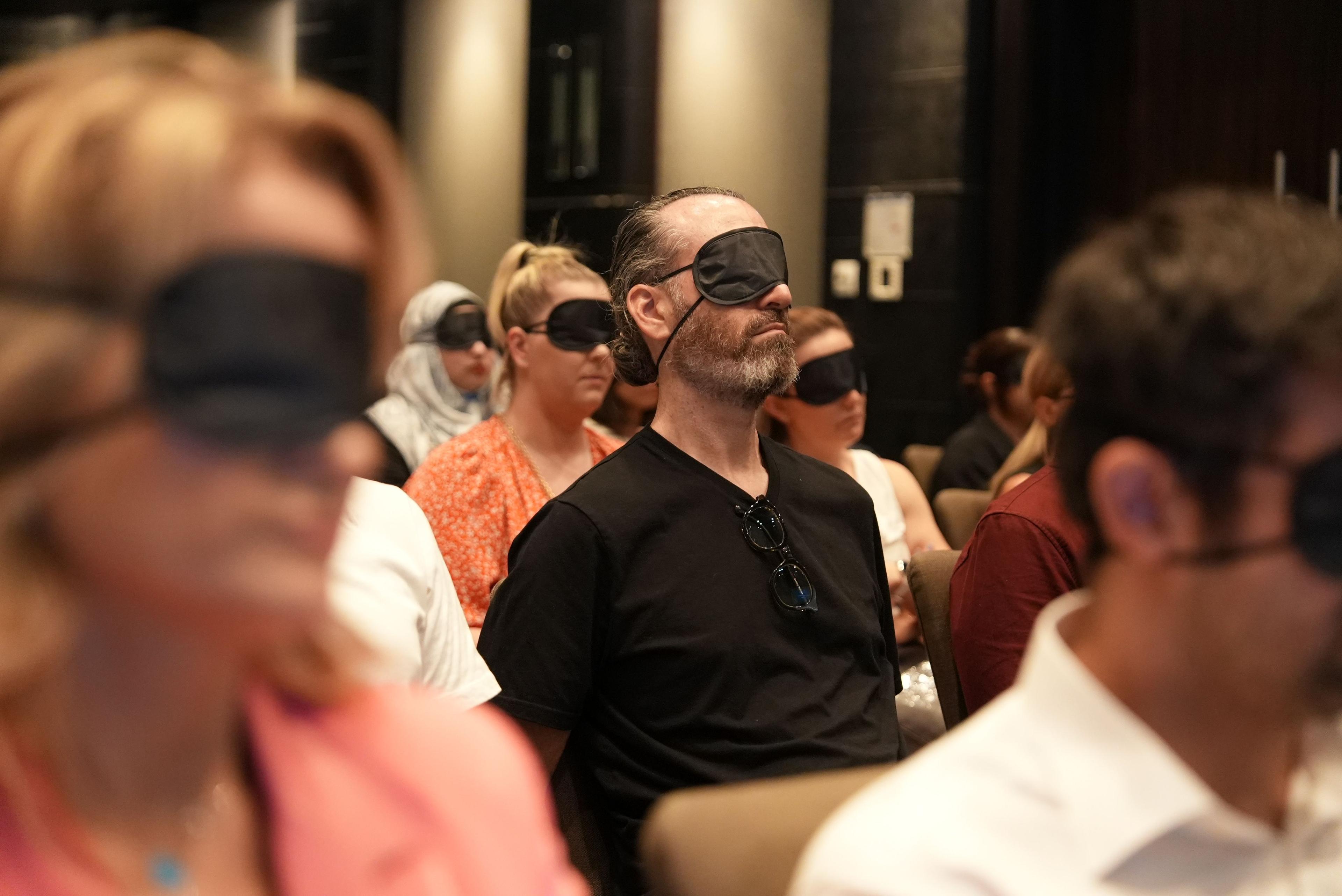
7. What do you think we could do differently to move beyond simply managing stress and practising self-regulation towards building a more conscious, balanced and fulfilling life?
There isn't one single formula I can give you and say, "Just do this and you'll be fixed." It's not about fixing yourself, as you're not broken. It's about changing.
You can go on a retreat and feel incredibly well, but the real work happens every day, when you wake up and start looking at yourself from the outside. You become aware, and awareness is really the key word.
I have conversations with myself every day. Sometimes I fall back into one of my old patterns and then reflect on it afterwards. I ask myself why I said something, and then take action, whether that's changing my behaviour in the future or apologising to someone I may have hurt.
It's really about becoming aware, but understanding the balance between awareness and overanalysing. Being aware means taking a step back, observing what happened, learning from it and moving forward.
My own practice is to wake up every day and do a morning meditation, a mental rehearsal of my day. I go through the thoughts, actions and feelings that I want to change. If I have important meetings or significant projects coming up, I visualise them. I see myself as this new version of myself and ask, "How would this person think, act and feel in this situation, compared with how my past self would have behaved?"
I mentally rehearse that future and give my body a taste of it. When the moment actually arrives, I can respond from this future version of myself, rather than falling back into the patterns of my past.
Meditation is also something that many great leaders and professional athletes use. They mentally rehearse how they are going to perform, visualising what they will do and how they will respond. When the moment comes, they aren't driven by fear or controlled by anger. Instead, they are guided by the emotions and mindset that allow them to know what they want to do, how they want to feel and how they want to think.
Ultimately, it's about showing up for yourself every day, taking a moment to reconnect with yourself and not being too hard on yourself. We all fall back into old programmes, but what's really important is that every day you remain aware and try your best.
Some people might think this sounds exhausting, but it's like going to the gym: if you don't go to the gym, you don't become physically fit. Becoming the best version of yourself also requires you to show up for yourself every single day.
For more information and to book a discovery call, visit the website


