
Why Your Weekend Is Making You More Exhausted
You made it to Friday. You have two days to rest, recharge, see your friends, exercise, run errands, and actually enjoy your life. So why does Sunday night still feel like you never stopped? According to Dr Rita Figueiredo, Clinical Psychologist and Managing Director of Peninsula Psychology, the problem isn't how you're spending your weekend. It's that you're treating it like a second shift. In this conversation, she unpacks the psychology behind what she calls "Weekend Compensation Syndrome", the modern habit of cramming all of our living into 48 hours and why, far from restoring us, it's quietly burning us out.

1. "Weekend Compensation Syndrome" isn't a clinical diagnosis, so what is it exactly, and why do you think it resonates so strongly with people right now?
While it won’t be found in any diagnostic manual, "Weekend Compensation Syndrome" is a term that perfectly captures a modern behavioral phenomenon: the desperate attempt to pack 100% of our living, resting, socializing, and self-care into the 48 hours of a weekend, to balance out a week where we felt near to 0% in control of our time. It is a defense mechanism against chronic overworking. It resonates so deeply right now because we are living in a culture of hyper-efficiency. We have optimized our work lives to the extreme, and naturally, we try to optimize our downtime too. People feel an underlying panic that if they aren't maximizing their weekend, they are wasting it.This culture of chronic deficit makes people feel not just tired, but starving for time, autonomy, and joy. It’s a collective symptom of a society that treats human beings like batteries to be drained Monday through Friday and rapidly plugged into a "fast-charger" on Saturday and Sunday. The pressure to "make the most of it" is immense because it feels like your only chance to feel human before the cycle resets.
2. From a psychological standpoint, what's actually happening when someone tries to cram rest, socialising, exercise, and errands all into two days, is the body and mind even capable of genuinely recovering that way?
Psychologically and physiologically, the mind and body are entirely incapable of processing recovery in this format. True recovery relies on the regulation of the autonomic nervous system. When we spend five days in a sympathetic state (fight-or-flight, driven by cortisol and adrenaline), switching to genuine rest requires entering a parasympathetic state (rest-and-digest), which only happens when there is unscheduled time, stillness, and a lack of urgency.
When someone treats a weekend like a high-stakes logistics operation - scheduling back-to-back social events, intense workouts, and life admin - the nervous system cannot distinguish between the stress of a work-related deadline and the stress of a packed Sunday calendar. The body stays in a state of hyper-arousal. We see a cognitive overload known as choice or decision fatigue. We are still planning, scheduling, and executing. By trying to optimize every single hour of the weekend, we perform rest rather than experiencing it, leading to a state of exhaustion that sets in by Sunday evening.

3. You work a lot with burnout and chronic stress. How often do you see Weekend Compensation Syndrome showing up in your clients, and what does it typically look like by the time they reach your practice?
I frequently see this in my practice. It is practically a baseline state for corporate professionals in urban centers. By the time clients sit on my couch, they are often at a breaking point, utterly confused as to why they feel so empty despite "doing everything right." Typically, it manifests as a vicious cycle of over-functioning and collapsing, where people experience a sense of depletion and alienation.
Clients describe a cycle: they push through the week, hit Friday night, and instead of feeling happy, they feel hit by a wall of fatigue. If they force themselves out to socialize, they feel disconnected or irritable. If they stay home, they are visited by anxiety and guilt. They end up feeling like they didn't actually get a weekend at all. They reach my practice when the illusion of the weekend fix breaks down entirely, and they realize they are trapped in a loop where the weekend is no longer a haven, but a second shift.
4. There's a guilt dimension to this that feels very specific to high-performing, driven people, the sense that slowing down even on a weekend feels like falling behind. How do you work with that mindset in therapy?
For high-performers, worth is often entirely enmeshed with productivity. To slow down is not seen as an act of self-care; it is perceived as a dangerous vulnerability, a sign of weakness. It triggers an existential anxiety that if they stop moving, they will fail, or worse, they will have to sit with the uncomfortable emotions they’ve been ignoring all week.
In therapy, we work on untangling achievement from identity. I help clients realize that this guilt is a systemic conditioned response, not an objective truth. We explore the concept of radical stillness, and I challenge them to look at rest not as something they must earn through exhausting labor, but as a fundamental biological and emotional right. We shift the narrative on reframing rest from "doing nothing" to "actively preserving the system", which actually sustains long-term resilience. I often challenge them to look at the data: is their hyper-vigilance actually making them happier, or is it just keeping them trapped? We practice "micro-doses" of unstructured time, learning to tolerate the initial discomfort of boredom until the nervous system realizes it is safe to settle.
5. The UAE has a very particular relationship with productivity and pace, long work weeks, a culture of ambition, an expat pressure to justify being here. How much does that context shape what you see clinically?
It shapes everything. As a systemic psychologist, I believe nothing exists in a vacuum. Context and boundaries matter immensely. In the UAE, the external system is incredibly intense; it’s an environment built on rapid growth, ambition, and a highly transient expat lifestyle. This creates a hyper-accelerated pace of life. People feel they must over-perform at work to justify their presence, their visas, their relocation and the sacrifice of being away from their home and extended families. And then, they also over-perform in their leisure time; responding to the pressure to experience the best restaurants, the finest beach clubs, and the most Instagrammable weekends, to prove they are "living the Dubai dream." The boundaries between work, social pressure, and self-worth become completely blurred. My role clinically is often to help clients build a psychological fortress against this external pressure so they can define what a meaningful life looks like for them, not the city around them.
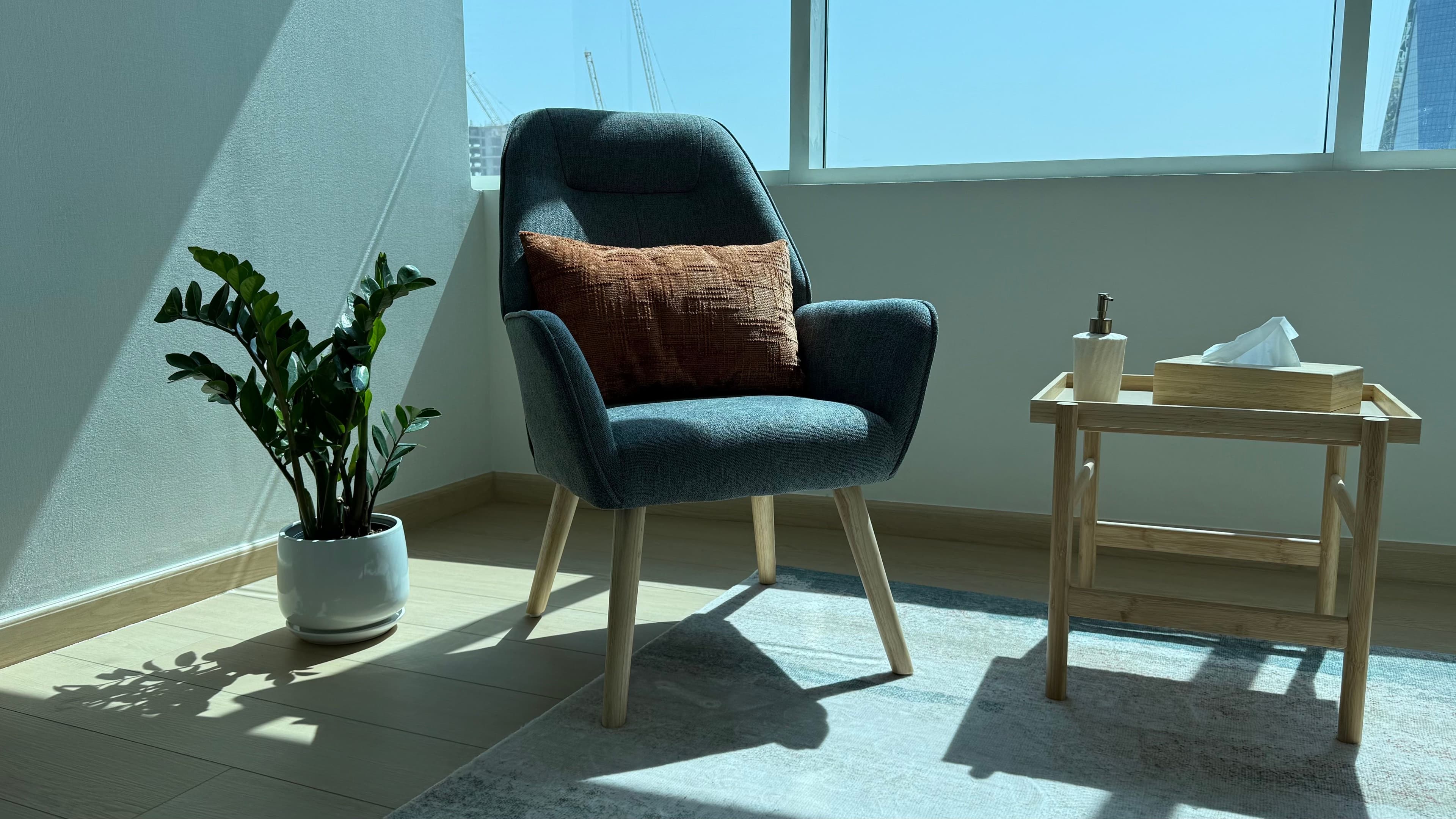
6. Is there a difference in how this shows up in couples versus individuals? Does the pressure to compensate on weekends create friction in relationships?
It shows up differently, but the root system is the same. For individuals, the conflict is internal: it’s a war between the mind's desire to achieve and the body's need to rest, leading people to burnout and self-criticism. For couples, this internal tension gets projected onto the partner, making the weekend a primary battleground for relationship friction over competing needs. Many times, one partner might need absolute isolation and silence to recover from a demanding corporate week; the other partner, who might feel lonely or disconnected during the week, desperately needs social interaction, adventure, and quality time to feel alive. When these two opposing coping mechanisms clash, it may create deep resentment. The pressure to make the weekend "perfect" for the relationship adds a layer of performance anxiety. Couples find themselves arguing about what to do, when the real underlying issue is that both of their nervous systems are completely depleted. Because time is scarce, the stakes feel incredibly high. A partner’s desire to sleep in can be misread as a rejection or a lack of investment in the relationship. At our practice, we see how Weekend Compensation Syndrome leads to transactional relating, where couples negotiate schedules rather than experiencing emotional intimacy, eventually driving them apart into parallel isolation.
7. What would a genuinely restorative weekend actually look like and is it realistic to prescribe that without it becoming just another thing on the to-do list?
A genuinely restorative weekend is defined not by a specific set of activities or what you do, but by a change in intention or how you feel while doing it. To prevent rest from becoming another metric to optimize, we avoid prescriptive checklists. Instead, we advocate for "unscheduled space": it means leaving a morning or an entire day completely blank, with no plans, and asking yourself in real-time what does my body and soul need right now? It involves practicing saying "no" to good opportunities so you can say "yes" to your own body cues. It’s about cultivating moments of low stimulation where the mind is allowed to wander without a measurable outcome or goal. For some people it means putting their phone and other devices down; for others it means spending time only with people who require zero performance; or engaging activities that give people a minimum sense of pleasure. It is entirely realistic if we stop aiming for a "perfect" weekend and instead aim for an "authentic and grounded" one.
8. Peninsula Psychology was built around the idea that no person is an island, that we heal and grow in connection with others. How does that philosophy shape the way you approach something like this, which on the surface looks like an individual problem but is really a systemic one?
This question goes to the very core of why I founded Peninsula Psychology. Weekend Compensation Syndrome is the perfect example of a systemic issue misdiagnosed as an individual failure. When someone burns out, society tells them to buy a meditation app or take a yoga class or to simply change their mindset - placing the entire burden of a broken ecosystem onto the shoulders of the individual. When people experience burnout and the exhaustion of chronic stress, their first instinct is to isolate. They feel like an island - lonely, surrounded by demands, with no way out. They think, "If I can just fix my time management or my motivation levels, I’ll be fine." But that is looking at the problem in isolation.
When we treat a client struggling with burnout or chronic hyper-functioning, we don't treat them in a vacuum. We look at the systems they inhabit. We look at how their workplace culture demands their time, how their relationship dynamics echo their exhaustion, and how the ambient pressure of their context influences their choices. In therapy, we work to transform the client from an isolated island back into a peninsula. True healing doesn't happen by isolating oneself further on a weekend; it happens by repairing our connection to the mainland. We look at how they can rebuild the bridge to a firm, secure ground - reconnecting deeply with their loved ones, setting structural and healthier boundaries with their employers, and engaging with their community. We don't just help people survive the weekend; we strive to help them reshape their relationship with the world they are anchored to, so people can actually thrive across the whole continuum of their lives.