
Wellness as a Leadership Imperative: Mark Sands on Executive Wellbeing
CEO wellness is coming to the forefront of corporate consciousness and conversation as more and more people are recognizing the impacts of today’s working world on well-being. Six Senses offers a spectrum of wellness practices to respond to the demands of today’s leadership landscape, from intentional programs at Six Senses Vana to lighter and faster fixes in urban locations like Six Senses Rome and the forthcoming Six Senses London. The Six Senses Integrated Wellness philosophy and personalized programs are tailored to identify, respond to, and even prevent the impacts high-powered professionals may face. Six Senses Vice President of Wellness, Mark Sands shares more.

1. Why do you think wellness is becoming such a priority for today’s CEOs and C-Suite leaders?
Wellness is coming into sharp focus for the CEO and C-Suite community. They are recognizing peak leadership starts with peak well-being. No longer are CEOs sacrificing health in pursuit of success, and instead, are increasingly investing in self-care as a necessity for leadership effectiveness. What’s more, entrepreneurs do not see themselves logging off when they reach retirement age and instead wish to continue working or embark on encore careers long into later life.
2. What areas of wellness are CEOs focusing on? What are the benefits?
Research consistently shows that well-being is not a luxury, it is a leadership imperative. CEOs who prioritize practices like sleep, mindfulness, and regular movement consistently demonstrate sharper judgment, greater emotional intelligence, and more balanced decision-making. They have also shown themselves to be up to 30% more resilient under pressure and less susceptible to burnout. And when executives lead by example, they create a ripple effect, shaping a culture of health, engagement, and performance throughout their organizations.
3. How is the way CEOs view mental health changing?
Many CEOs have stopped feeling the need to be superhuman and hide signs of weakness. Everyone’s eyes are on them, so sometimes it’s that desire to present themselves flawlessly rather than as a human being which can lead to burnout. Encouragingly, there is an increasingly intuitive, human approach to leadership. There is a certain level of openness to the understanding that their impact on their business goes beyond how they're perceived. Leadership is multifaceted – it’s how they lead their teams, how they make decisions and perform cognitively. It also reflects on the longevity of their career. If cognitively they're impaired because they're not sleeping well or they're stressed, then they really struggle. Rest and recovery are key to making good balanced decisions.
4. How are today’s CEOs exercising within a demanding schedule?
When I started in the industry, a lot of the CEOs I met were exercising for the structure it gave them – a demonstration of discipline, determination and dedication that wasn’t at their desk. It was a time when they weren’t looking at emails or in meetings. I don't think back then they’d necessarily recognized the benefits it was having to their cognitive, emotional and physical resilience. It’s why I think a disproportionate number of CEOs do Brazilian jiu-jitsu or other mixed martial arts. It’s a discipline where you get close to people and can feel vulnerable.
Now, 14 years later, thanks to the increasing openness around mental well-being, these benefits are resonating in the workplace as today’s leaders are finding they are approaching the working world with a calmer, more focused and thoughtful outlook.
5. What are the common complaints of high-level executive guests?
A major factor is time. Many professionals operating at that high level see everything in 30-minute slots. It’s an appointment in their calendar, a call to dial into. But what we see is when we take someone away from their normal environment and unshackle them from digital devices, the boundaries of time fade. What we do at Six Senses is provide our guests with the knowledge and support to reconnect with themselves, others and the world around them, so that they give a better version of themselves to their business and employers, and ultimately themselves.
We also see a lack of joy. This may not be something they vocalize, but it is evident from the shell of themselves that arrives in our properties. They arrive ground down by the daily grind. But what we see is that as they come away from the pressures of their role, discover something new whether that’s in our Earth Labs, Recovery Lounges, or through crafted experiences like stargazing or fire ceremonies, and surrender themselves to pinch-me moments like paragliding into Six Senses Zighy Bay, you see that sense of purpose return. Their drive is reignited, and they become more engaged in the world around them. It’s like they’ve turned a black and white movie into a vibrant technicolor.

6. How does the frequent flyer lifestyle impact well-being?
The main issue is the scheduling of travel and the expectation it equates to working hours. Another is adapting the circadian rhythm to the new time zone. High-level leaders may experience multiple time zones within a short period, which doesn’t allow the body time to rebalance.
7. And what is some of the advice you’d give to help today’s business traveler live well whilst travelling the world?
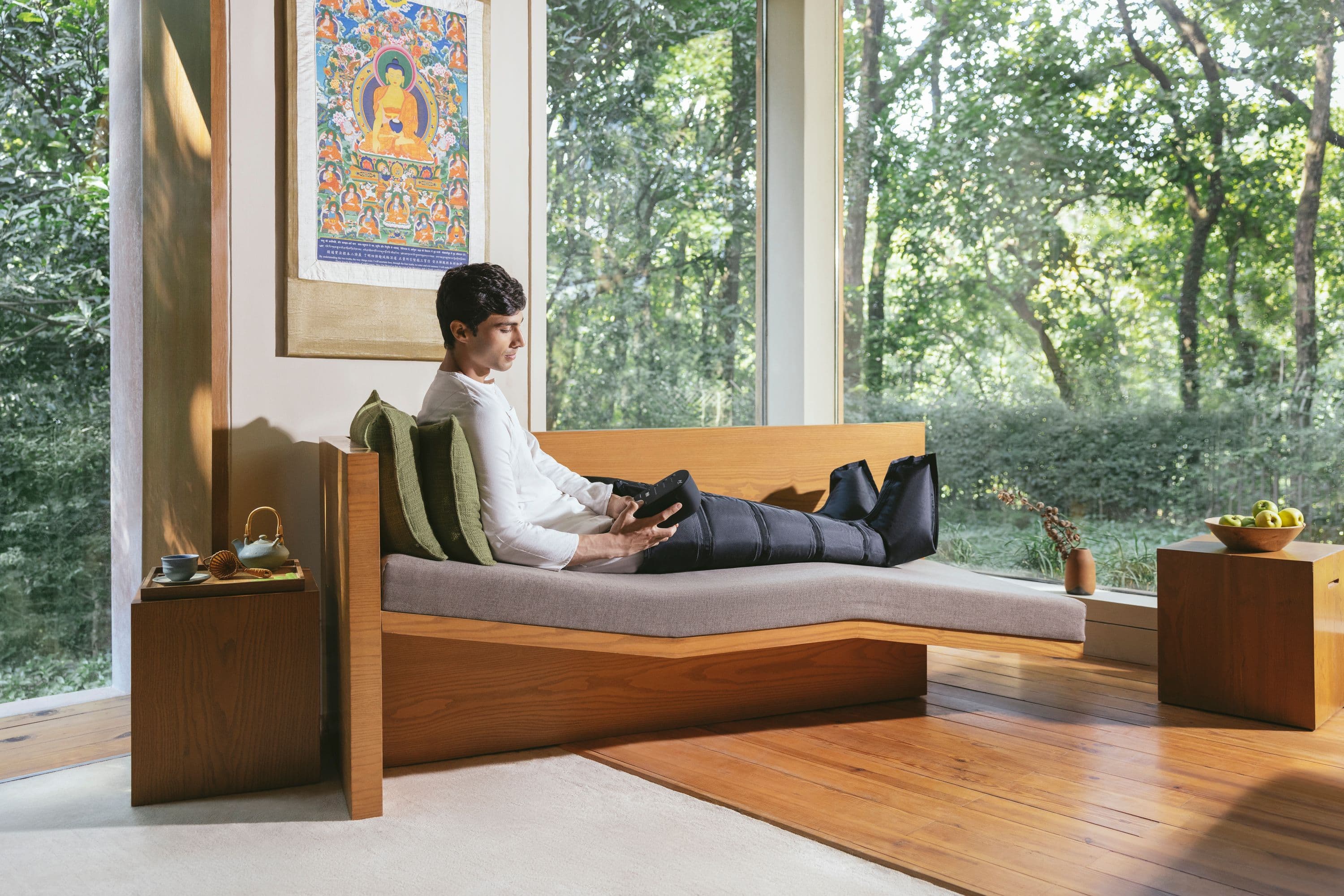
My advice would be avoiding scheduling meetings the moment you land and give your body the time and support it needs to recalibrate with the destination. Movement, food and nourishment are a must and beyond this biohacking practices like compression boots or cryotherapy can help overcome travel fatigue. Also spending time in natural lighting rather than artificial light of a meeting room. Melatonin and creatine are good supplements. And staying hydrated, so laying off the caffeine and alcohol.
8. Why is high stress commonplace amongst CEOs and how is Six Senses helping to address stress?
Too often, a CEO is operating on autopilot and not registering the behaviors that are negatively impacting their nervous system. Be it reaching for their phone the minute they wake, making poor food choices or not allowing themselves to stop and be still. Practices like sound healing, which we offer at every Six Senses, and breathwork, as well as digital detoxing and Watsu, are some of the ways we help our guests to rebalance their nervous system and soothe stress.
People are also waking up to just how important sleep is. Poor sleep hygiene plays havoc with both our body and brain health. As such, more and more of our guests are embracing the space and calm of their time at Six Senses to address problematic sleep patterns as they benefit from our Sleep With Six Senses standard. This means every guest room is optimized for sleep, from the handmade mattresses by Naturalmat to the organic pillow menu and bedding on top. Sleep tracking devices are also available for our guests to analyze their sleep patterns and pinpoint problem areas.
9. How is Six Senses uniquely positioned to respond to the wellness needs of today’s business leaders?
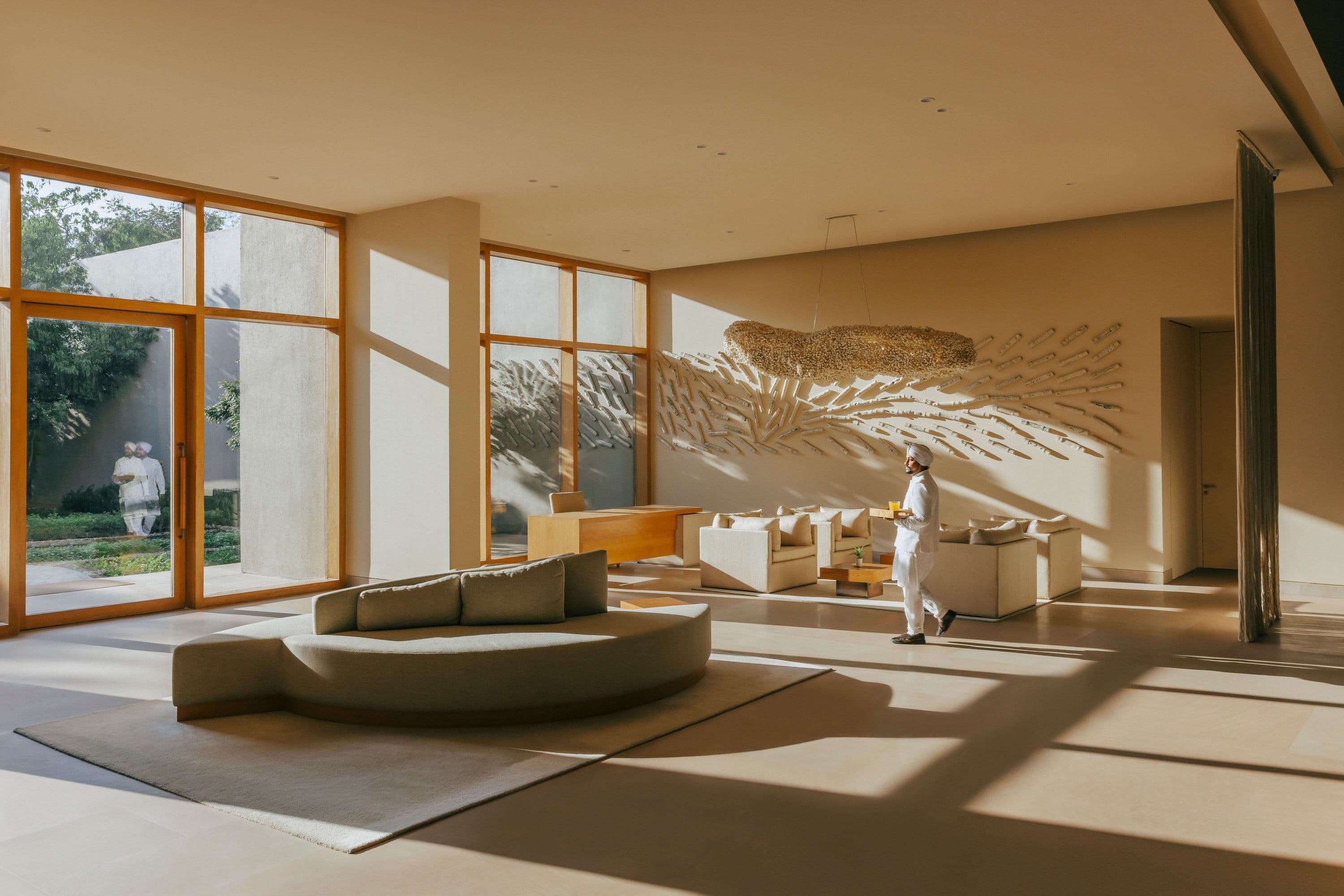
We meet people where they are and take them on a journey that goes a bit further into an insight, or tools they can take home to benefit their quality of life every day. Each program is different and follows the Six Senses Integrated Wellness philosophy. We offer a layered approach to wellness where you can access programs at different layers and levels. When you choose to go to a destination spa, you’ve already made the decision to work on something. Our properties are a bridge where we access a greater number of people and can give them an entry point to insights, knowledge, equipment, and biohacks. Pull on that thread and before long the trip to Six Senses Vana is booked.
10. How is the Six Senses Integrated Wellness philosophy particularly relevant to high-power professionals today?
CEOs like data and want to see metrics that demonstrate tangible change. It’s how they operate in business and the language they speak when it comes to wellness.
At Six Senses, we follow a similar approach. At the beginning of a guest’s stay, we do a personalized wellness screening which takes a read of the key physiological markers, such as stress resilience, blood pressure, energy levels, cognitive clarity, rest etc. We then build a program around this information with the idea being to improve these measurements during the guest’s time at a Six Senses, while also arming them with the knowledge to continue building on these benefits long after their actual stay.
Sleep tracking provides clear metrics, along with whatever smart wearable or WHOOP strap they’re also using. Our experts can take data from both to help accelerate their performance or recovery, or improve sleep, or decrease stress. Along with our clinical partners, we can also go deeper and look at epigenetics and DNA testing. Knowledge really is power when it comes to improving the wellbeing of today’s professionals.