
Starting From Zero: Dutch Brothers Racing on Ambition, Humility and Learning in Public
Most of us spend years building the kind of competence that lets us walk into a room and feel at ease. So what happens when you deliberately give that up?
Alan and Jon of Dutch Brothers Racing have built successful careers on being capable and in control. Now they are choosing to become complete beginners again, on a racetrack in Abu Dhabi, with the cameras rolling. Their programme, DBR, is built around a simple idea: every lap has meaning. The good sessions, the bad ones and everything learned in between are all part of the story, and they are sharing it openly.
We sat down with them to talk about what it really takes to start something difficult later in life. They spoke candidly about the discomfort of being the least experienced person in the paddock, the discipline of training their minds and bodies for the demands of the circuit, and the families and team quietly making it all possible. They also shared how being coached, corrected and occasionally humbled by a stopwatch has changed the way they lead at work.
It is a conversation about motorsport, but it is also about something many of us wrestle with: whether ambition has an expiry date, and what we discover when we stop protecting our pride and start doing the work in public.

1. You have both built successful careers by being competent and in control. What was it like choosing to become complete beginners again, in public, on a racetrack?
ALAN: Honestly, uncomfortable. You spend decades reaching the point where you can walk into a room and broadly understand what is happening. Then you get into a race car and you are two seconds behind someone who has been doing it since the age of eight. There is nowhere to hide and no version of that story where it is somebody else's fault. That is precisely the point of DBR: starting from zero, being honest about the gap and doing the work in public.
JON: What Alan has left out is that we also decided to film it, which seemed entirely reasonable at the time. We cannot disappear for two years, become quietly competent and return as though we had always known what we were doing. People will see the good laps, the bad laps and, occasionally, our heroic explanations afterward. 'Every Lap Has Meaning' is not simply a line for us. The progress, mistakes and lessons are the story. I still think making all of that visible was the right decision, most days.
2. Alan, you said learning to drive the car properly is 'the principal technical risk.' Was that hard to admit out loud, and what did it take to say it anyway?
ALAN: It was not hard to admit because it is objectively true. Almost everything else in the programme can be organised, funded or hired: you can prepare the car, bring in an engineer, book simulator time and build a fitness plan. The driving cannot be outsourced. When I get in the car, I am the least optimised part of the system. The difference between driving quickly on the road and driving properly on a circuit is enormous, especially under braking. DBR only works if Jon and I confront that gap honestly and close it.
3. When you have a bad session on track, does that stress carry into your business decisions that week, or have you found a way to keep the two separate?
JON: For me, it goes the other way. You arrive at the circuit carrying everything from the week, and then it disappears. Turn 1 at Yas has very little interest in your inbox. You cannot think about a contract and still get the braking point and exit right. That complete focus is part of why I do it, if I am honest.
ALAN: The frustration occasionally follows me home. What follows me into work is more useful: the discipline of the debrief. After a session, you look at the data and identify the three corners where the time actually went, rather than blaming the entire lap. That is very close to how we want DBR to operate and how I try to lead: find the evidence, isolate what matters and improve it.
4. What do your partners, families and co-founders think about the time, money and physical risk you are both committing to this?
ALAN: There is a great deal of support, plenty of curiosity and a fair amount of 'are you sure?' The commitment of time and money is substantial, and the physical risk is real rather than theoretical. We do not romanticise any of that. DBR is serious, but it is built around real people with real jobs, families and limits. Their support makes the ambition possible.
JON: The support at home is immeasurable. When people see two names on the car and two people in race suits, the whole thing can look self-contained. It is not. Our families, Andy and the wider team are making an enormous amount happen behind the scenes. DBR may be our names at the front, but it is being built by a much larger group of people here in Abu Dhabi.
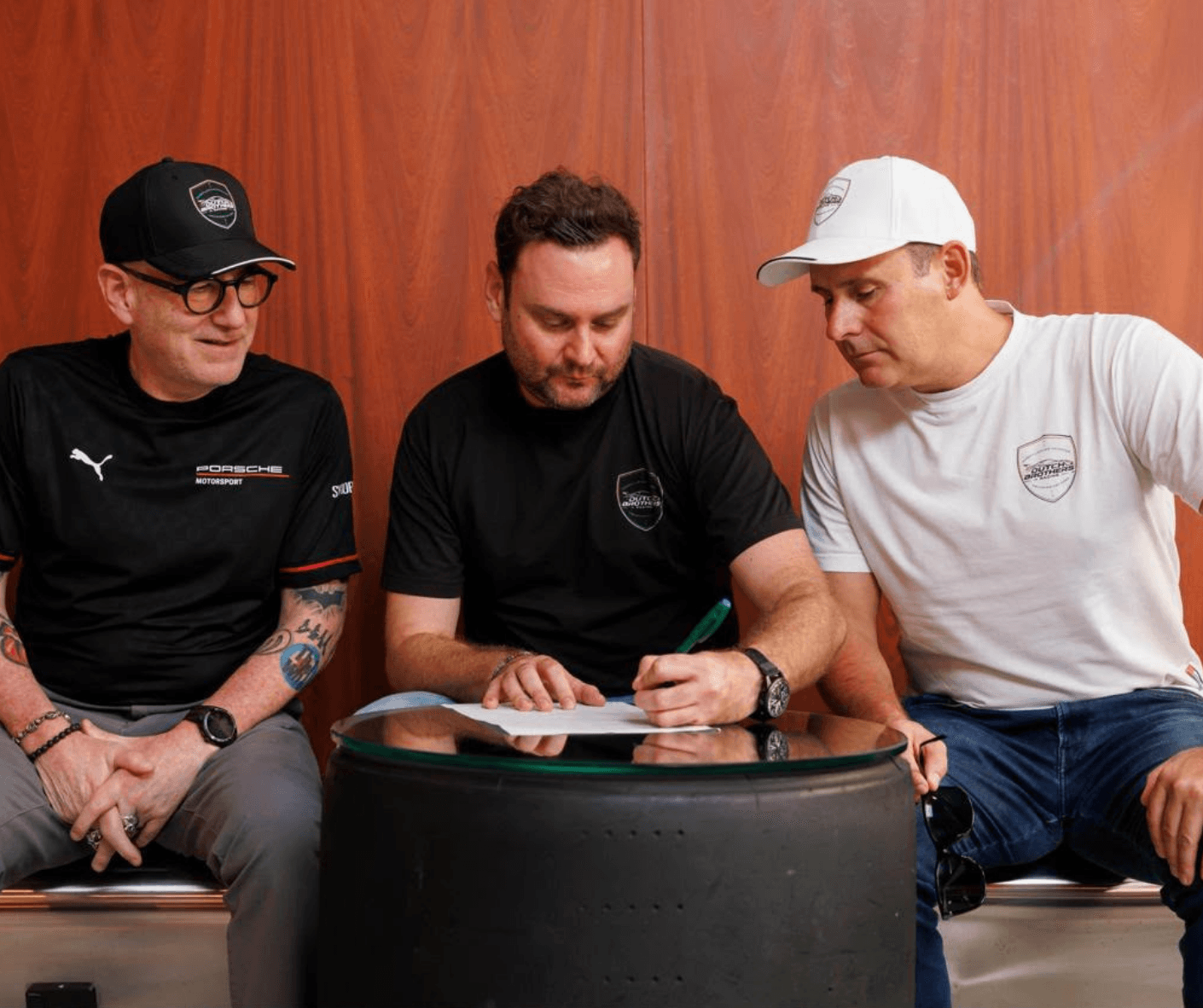
5. Andy Boux talked about keeping the car and the drivers 'in roughly the same condition.' Who is managing your condition, mentally and physically, day to day?
JON: Andy would say Andy, and he would have a case. He would probably also produce data to support it, which is irritating.
ALAN: Increasingly, it is us. The car is meticulously prepared and the drivers need to approach themselves with the same discipline. I work with a personal trainer, focus on recovery and put in one to two hours on the simulator on many days. We are learning later in life, so physical and mental preparation are not optional. They are part of earning the right to be credible on the grid.
6. Founders are usually expected to project confidence. Racing forces you to fail publicly while you learn. How has that changed the way you lead at work?
ALAN: Being coached again has been one of the most valuable parts. You try something and, thirty seconds later, the stopwatch tells you whether it worked. No title, experience or explanation buys lap time. The distance from beginner to the front is real, and you have to respect it. After spending a weekend being corrected by data, a coach and a stopwatch, you become much less defensive about being challenged elsewhere.
JON: It has made me much better at saying, 'I do not know yet.' There is a style of leadership that assumes the person in charge must always have the answer. Racing exposes the weakness in that very quickly. You need the right people around you, you need to listen and you need to act on what the evidence says. DBR makes that process unusually visible.
7. What is the difference between walking into a board meeting and walking into the paddock? Is one harder than the other right now?
JON: A board meeting is familiar, so objectively it is the easier room. I also tend to know where all the furniture is.
ALAN: In business, you have earned the right to be in the room and everyone knows it. In the paddock, we have not earned that right yet. Motorsport does not owe us credibility because our careers elsewhere went well. We have to earn it lap by lap, through preparation, respect and results.
JON: Ask us again when we are sitting on the grid at Yas for round one. I reserve the right to revise my answer.
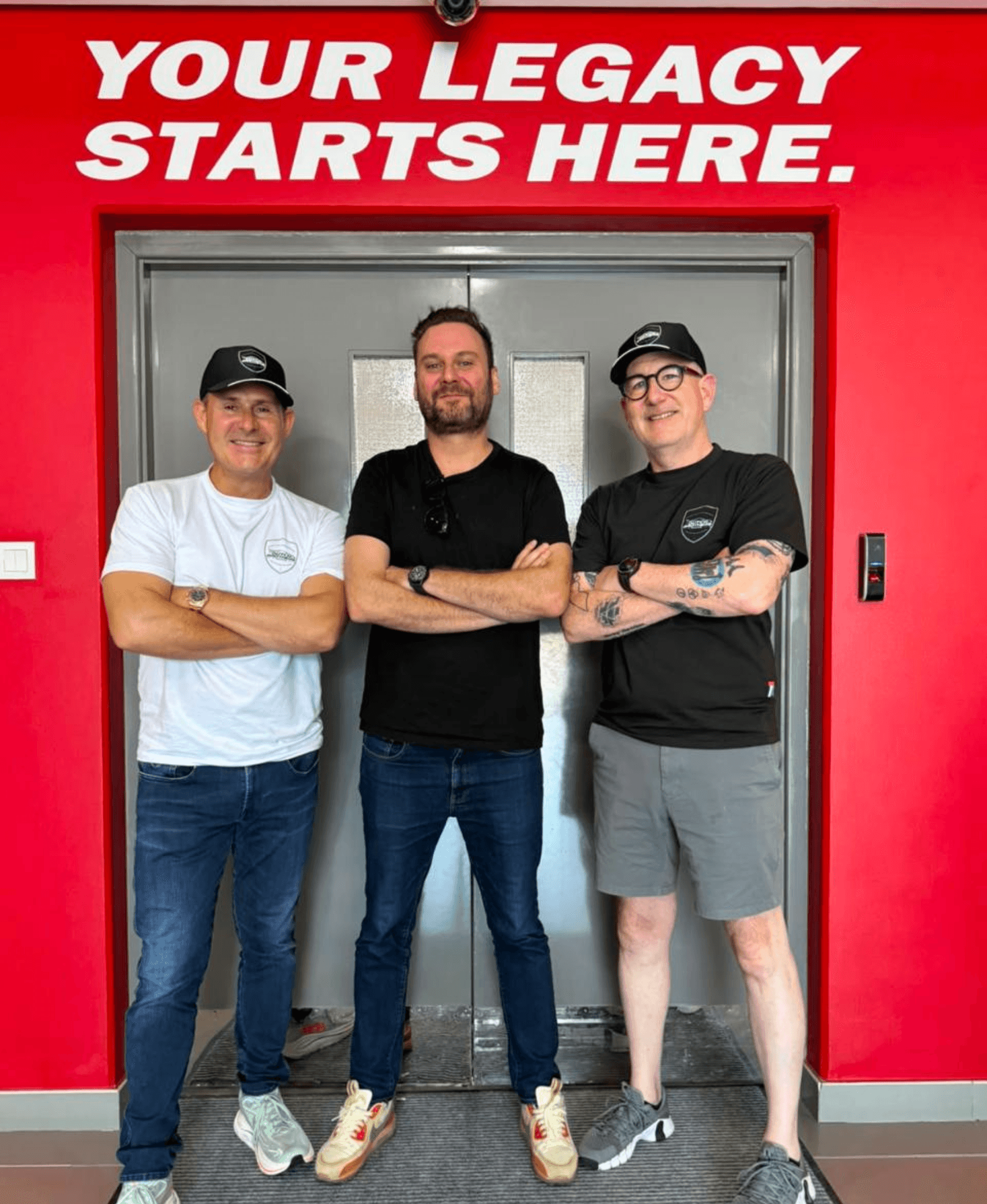
8. If the programme failed quietly in year one, what would you have lost besides the money? What were you really testing by starting it?
ALAN: We would have lost the chance to find out. At some point an idea either remains a conversation or you commit to it and discover what is possible. DBR began with two people asking whether we could genuinely become racers at this stage of our lives. Once we chose to answer that question publicly, the greater failure would have been retreating before we had given it an honest test.
JON: We are testing something broader than whether two men starting late can learn to race. We are testing whether ambition has an expiry date: whether you can begin something genuinely difficult, accept being a novice, understand the sacrifice required and see it through. We also want to build an Abu Dhabi racing platform that brings people and partners into that journey. That is why every lap has meaning. Each one should teach us something, reveal something or move the story forward.