
Set to Open in Q4 2026, Dubai's New Longevity AI Research Lab Will Pioneer AI-Powered Healthy Ageing
Dubai-based Longevium is set to open a pioneering Longevity AI Research Lab at Dubai Science Park in Q4 2026 following a $7 million investment. Focusing on AI diagnostics, digital twins, biological ageing and regenerative medicine, the facility aims to accelerate personalised preventive healthcare and strengthen Dubai's position as a global longevity hub.

For decades, healthcare has largely focused on treating illness after it appears, but what if medicine could predict disease years before symptoms develop? What if doctors could test treatments on a virtual version of your body before prescribing them? And what if your biological age, not the number of candles on your birthday cake, became the most important measure of your health?
These questions are no longer confined to science fiction. They are becoming the foundation of a new era of longevity medicine, and Dubai is positioning itself at the centre of that transformation.
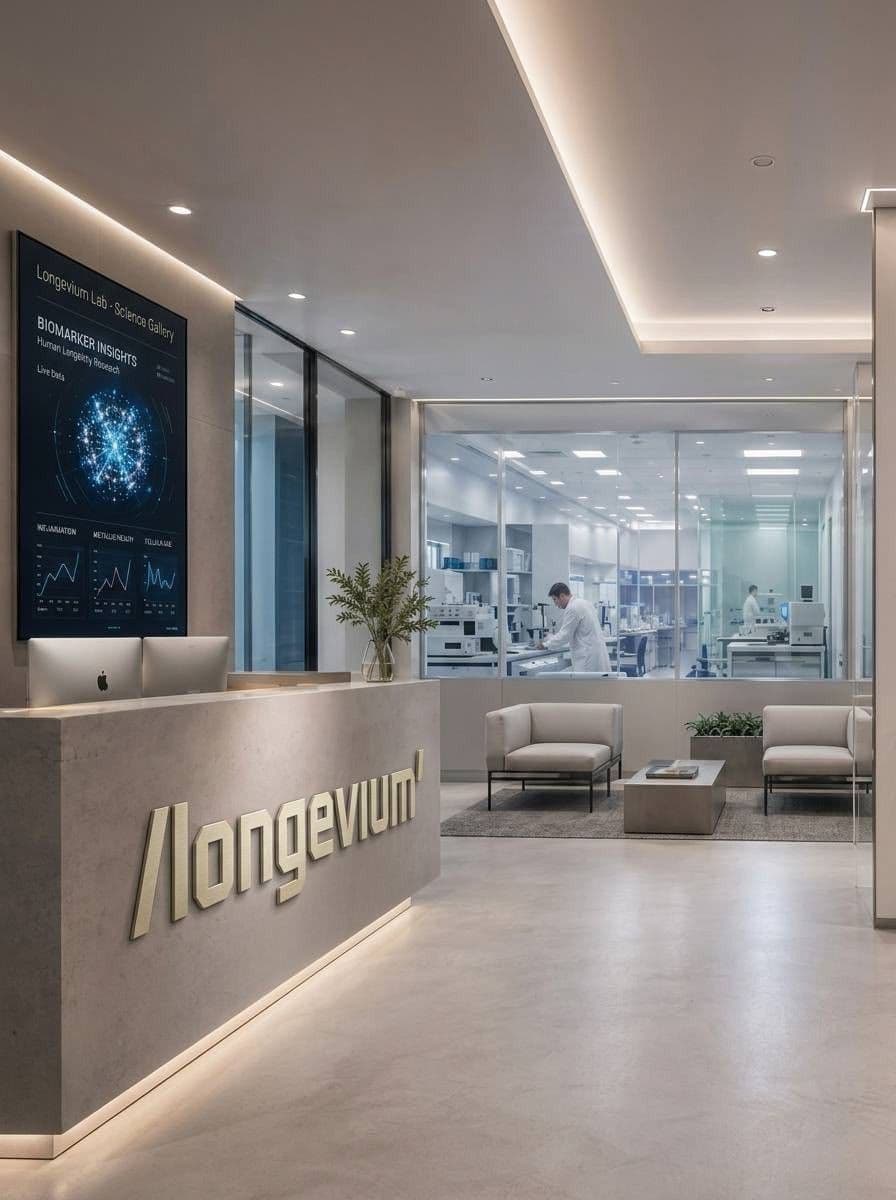
Following a $7 million investment round, Dubai-based longevity healthcare company Longevium has announced plans to open a dedicated Longevity AI Research Laboratory at Dubai Science Park, scheduled to launch in the fourth quarter of 2026. Rather than serving patients directly, the new facility will function as an innovation hub where artificial intelligence, biomedical research and clinical medicine converge to redefine how we prevent disease and extend healthy lifespan.
As longevity becomes one of the fastest-growing sectors in global healthcare, the lab represents a significant step towards making personalised, predictive medicine a reality.
Moving beyond traditional healthcare
Most healthcare systems still operate reactively, treating disease once it has already developed. Longevity medicine turns that model on its head. Instead of asking "How do we treat illness?", longevity specialists ask "How do we prevent it altogether?"
The new research laboratory will focus on developing technologies capable of identifying health risks years earlier, measuring biological ageing more accurately and helping physicians personalise treatments based on each individual's unique physiology.
It's a shift from generalised medicine towards healthcare that is increasingly predictive, preventative and deeply personalised.
AI meets human biology
AI has already begun reshaping medicine, but Longevium aims to take that integration much further. The laboratory will expand on technologies already being used across the company's three Dubai clinics, including Doctor Deep, an AI-powered clinical assistant that supports physicians, and a biological age assessment platform designed to evaluate how fast the body is truly ageing.
The next phase is significantly more ambitious. Researchers will work on creating patient-specific digital twins, virtual biological replicas built using complex cellular and molecular data. These digital models could eventually allow doctors to simulate treatments, evaluate medication responses and estimate disease risk before therapies are introduced in real life.
Rather than relying solely on population averages, medicine could become uniquely tailored to every patient.
Measuring the age that really matters
One of the laboratory's major priorities is refining biological age assessment. Unlike chronological age, biological age reflects how well the body is functioning internally. Lifestyle, genetics, stress, nutrition, sleep quality and environmental factors all influence how quickly we age.
To improve accuracy, researchers plan to combine laboratory biomarkers with ultrasound imaging, body composition analysis and wearable health data to create what could become one of the region's most comprehensive AI models for healthy ageing.
The goal is not simply to tell people how old they are biologically, but to provide actionable insights that help slow the ageing process and reduce future disease risk.
The rise of regenerative medicine
Another major research area will focus on regenerative medicine and tissue engineering. Scientists will investigate advanced cellular therapies, tissue repair technologies and innovative approaches aimed at restoring organ function rather than simply managing decline.
Although many regenerative treatments remain in active research, the field continues to generate enormous interest as scientists search for ways to improve healing, preserve mobility and potentially extend healthspan.
Instead of accepting age-related deterioration as inevitable, researchers increasingly believe many aspects of ageing may one day become treatable.
Smarter diagnostics, earlier detection
The laboratory also plans to investigate several emerging diagnostic technologies that could fundamentally change how diseases are detected.
Among them are swallowable imaging capsules capable of examining the gastrointestinal tract without invasive procedures, AI-powered skin scanners designed to identify melanoma at earlier stages and smart contact lenses that analyse tear fluid continuously for signs of metabolic and systemic health changes.
These technologies share one common goal: identifying problems before they become serious.
Early detection remains one of the strongest predictors of positive health outcomes, and AI is rapidly improving medicine's ability to spot subtle changes long before traditional diagnostics.
Exploring new frontiers
Perhaps one of the laboratory's most intriguing research programmes will explore the medical potential of noble gases. Xenon has already demonstrated promising applications in organ protection and stress-related conditions, while researchers are also investigating its potential role in neurodegenerative diseases.
Meanwhile, argon, helium and krypton remain earlier-stage research areas with scientists exploring their possible therapeutic applications.
Although much of this work remains experimental, it reflects the increasingly interdisciplinary nature of longevity science, where physics, biology, AI and medicine intersect in unexpected ways.
Building on clinical experience
The new laboratory is not being built in isolation. It draws on the experience of Longevium's existing network of three Dubai clinics located in Jumeirah 3, Jumeirah Lake Towers and Jumeirah Village Circle, which together have served more than 30,000 patients.
Supported by nearly 100 physicians and specialists, the clinics provide a valuable real-world clinical environment where longitudinal health data can help validate emerging technologies and refine future diagnostic tools.
This connection between clinical practice and research allows discoveries to move more efficiently from the laboratory into patient care.
A global vision rooted in Dubai
"Our mission is to make the world's most advanced longevity innovations accessible to more people and help create a future in which healthy human lifespans of up to 200 years may become possible," says Dr. Ksenia Butova (MD), Founder and CEO of Longevium.

While living to 200 may still sound extraordinary, the broader ambition reflects a rapidly growing movement within longevity medicine: not simply adding years to life, but adding healthier years to those already ahead of us.
With Dubai continuing to invest heavily in healthcare innovation, artificial intelligence and life sciences, projects like the Longevity AI Research Laboratory reinforce the emirate's ambition to become one of the world's leading destinations for preventive medicine and longevity research.
For patients, clinicians and scientists alike, the message is increasingly clear: the future of healthcare may not begin when we become sick, but decades before, powered by data, AI and a deeper understanding of how we age.