
How PureHealth Is Redefining Children's Mental Wellness
Children's mental health is becoming a global wellness priority, with early intervention recognised as key to lifelong wellbeing. PureHealth's new SAKINA for Children network brings integrated, family-centred mental healthcare to Abu Dhabi, combining specialist services, evidence-based therapies and community education to help young people thrive from the earliest stages of development.

The UAE is taking an important step towards making specialised mental healthcare more accessible for young people, and it's a sign of a much bigger shift in how we care for the next generation.
For years, conversations around wellness have focused primarily on adults. Burnout, anxiety, mindfulness and emotional resilience have become part of our everyday vocabulary, but what about children?
The truth is, mental health doesn't begin in adulthood. It begins from the earliest years of life, shaped by relationships, environments, experiences and emotional development. As awareness grows around childhood anxiety, ADHD, autism spectrum disorder, behavioural challenges and emotional wellbeing, healthcare providers are recognising that supporting children early isn't simply beneficial, it's truly essential. Increasingly, experts agree that early intervention can change the trajectory of a child's life.
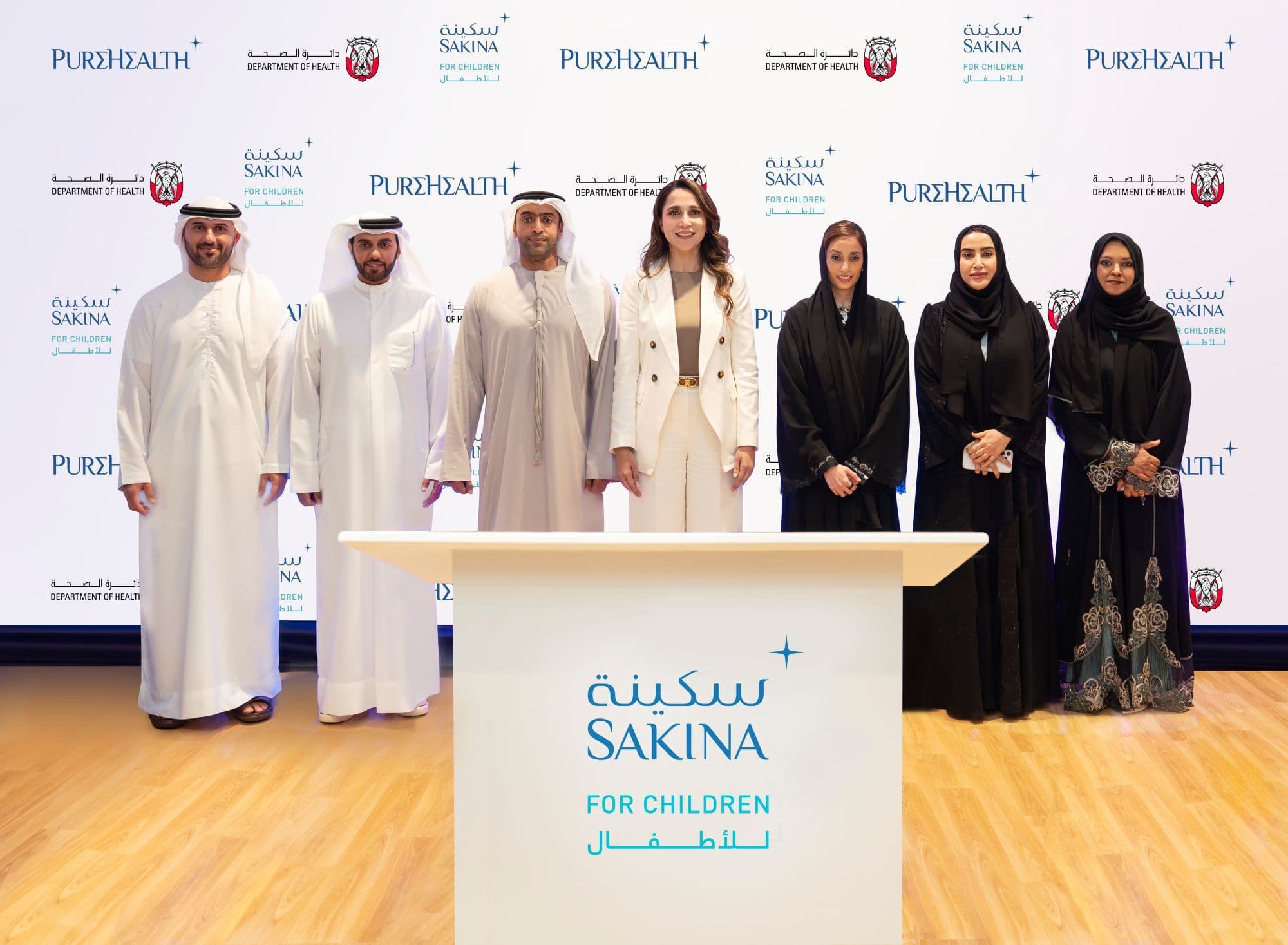
This is the thinking behind SAKINA for Children, a newly launched specialist mental health network from PureHealth, designed to provide integrated care for children and adolescents across Abu Dhabi. More than simply expanding healthcare services, the initiative reflects a growing recognition that mental wellbeing deserves the same attention as physical health from the very beginning.
Moving beyond crisis care
Traditionally, mental healthcare has often been reactive. Families seek support when challenges become overwhelming, behaviours escalate or academic performance begins to suffer.
Today's approach is different. Modern child psychology places greater emphasis on identifying concerns early, sometimes before they develop into more significant conditions. Whether it's speech delays, emotional regulation difficulties, learning differences or anxiety, earlier diagnosis allows children to receive personalised support while their brains are still developing rapidly.
This preventative model not only benefits children but also reduces long-term emotional and social challenges for families. SAKINA for Children has been developed around exactly this philosophy.
Bringing together child and adolescent psychiatry, developmental paediatrics, occupational therapy, speech and language therapy, behavioural interventions and family psychological support, the network offers coordinated care tailored to each child's individual developmental needs.
Rather than treating symptoms in isolation, the model recognises that every child's wellbeing is influenced by family, school, social relationships and emotional experiences.
Families are part of the treatment
One of the most significant shifts in paediatric mental healthcare is the move towards family-centred care. Children don't experience mental health challenges alone. Parents, siblings and caregivers often navigate uncertainty alongside them, searching for answers while balancing everyday family life.
By involving families throughout assessment, treatment and ongoing care, specialists can create more consistent support systems that continue beyond the therapy room.
This holistic approach also reflects the UAE's Year of the Family, reinforcing the idea that stronger families build healthier communities.
As Shaista Asif, Group CEO of PureHealth, explains: "At PureHealth, we believe mental health must start with the youngest members of our society. With SAKINA for Children, we are building a dedicated, integrated model of care that addresses the full spectrum of child and adolescent mental health, from early intervention through to specialised treatment."
Every child is different
One-size-fits-all care has no place in child psychology. Children develop at different rates, communicate differently and respond uniquely to treatment. That's why evidence-based assessment tools have become such an important part of modern mental healthcare.
SAKINA for Children incorporates internationally recognised diagnostic frameworks, including ADOS assessments for autism spectrum disorder, WISC cognitive evaluations and Conners Rating Scales for ADHD, allowing clinicians to build personalised treatment plans based on each child's individual strengths and needs. The result is care that is both clinically rigorous and deeply personalised.
Creating spaces that feel safe
The environment plays an important role in emotional wellbeing, particularly for children. Clinical settings can often feel intimidating, making it harder for young people to engage openly with therapy. Increasingly, healthcare providers are designing spaces that feel calm, welcoming and sensory-friendly.
SAKINA for Children's facilities include occupational therapy rooms, speech therapy spaces, sensory and digital therapy environments, inclusive play areas and dedicated inpatient units created specifically for children requiring more intensive support.
These thoughtfully designed spaces encourage children to feel comfortable, supported and understood while receiving treatment.
Breaking down barriers
Access remains one of the biggest challenges in children's mental healthcare worldwide. Language, availability of specialists and fragmented services can make it difficult for families to find appropriate support.
To address this, SAKINA for Children offers services in Arabic, English, Hindi, Urdu and Malayalam, making specialist care accessible to Abu Dhabi's diverse population. The network is expected to support nearly 500 children each month through coordinated outpatient programmes, inpatient services and early intervention pathways.
Alongside clinical care, educational workshops, school partnerships and community awareness programmes aim to reduce stigma while helping parents and teachers recognise the early signs that a child may need additional support.
A healthier future starts early
Perhaps the greatest shift taking place isn't clinical, but cultural. Mental health is increasingly being recognised as a fundamental part of overall wellbeing rather than something separate from physical health. For children, this integrated approach has the potential to improve not only emotional resilience but also academic performance, relationships, confidence and long-term quality of life.
Supporting children during their formative years creates healthier adults, stronger families and more resilient communities. As conversations around wellness continue to evolve, initiatives like SAKINA for Children demonstrate what the future of healthcare could look like: connected, compassionate and centred around the whole person, not just their diagnosis.