
From Data to Understanding: Mehak Butaney on Rethinking How Women Relate to Their Bodies
Some people arrive at wellness through a single door. Mehak Butaney came through several. Trained as an engineer, shaped by design studies at Parsons and deepened by a 200-hour yoga teacher training, she brings a rare way of seeing to her work: the ability to zoom in on the breath, the joints and the person on the mat, and then zoom out to the spaces, systems and stories that shape how we live and heal.
Today, Mehak teaches Slow Sessions at Paus, and her curiosity extends well beyond the studio into the fast-growing world of FemTech. In this conversation, we talk about what real expertise in yoga looks like, why working with an injury is different from working around it, and where women's health technology is still falling short of the women it's meant to serve. We also explore the tension between a felt, intuitive practice and the numbers on our wrists, and what it might look like to teach women to understand their bodies before they're taught to judge them.

1. Your path into yoga is an interesting one, coming from a design background at Parsons before deepening into a 200-hour teacher training. How did those two worlds, creative design and physical practice, shape the kind of teacher and practitioner you've become? My path so far has definitely not been linear. I’ve moved across engineering, design, and wellness, and those worlds have increasingly overlapped. I don’t think any one of those identities is complete without the other. I learnt human centered design and to pay attention to details as an Engineer. At Parsons, I learned to zoom out and understand systems - how people, behavior, services and organizations connect. I think both those worlds have shaped the teacher and practitioner I am becoming. To me, yogasana is more than a series of poses. At the micro level there is the breath, the joints, the nervous system, the alignment, the person. As you zoom out, you begin to see how those elements fit into the bigger picture - the environment you practice in, the language used, the pace of the class, how present you are, and then how the practice fits into someone’s day or life. To be able to zoom in and out in this manner is a result of all my worlds overlapping. I tend to fixate, in a healthy way, on how things are experienced and what kind of impact they make; and, on whether a practice is intelligently layered, accessible to and useful for the person doing it. I should add that my father, a doctor, has had a massive influence on the way I think. Conversations about health and how people experience care have always been part of my environment.
2. The yoga space is full of people who can hold a pose beautifully, but what in your view actually separates a competent instructor from a truly knowledgeable one? What does expertise in yoga really look like from the inside? I think in any profession centered around people, there is foundational knowledge, and then there is the kind of judgement, which some of us call intuition, that can only be developed through consistent practice and application of the skill. This analogy may be a stretch but bear with me. Doctors go through medical school and then a rather rigorous residency. Learning the theory is essential, but learning how to apply that knowledge to real people is what deepens the skill. I am sure I will get some flak for saying this, but I think movement and mindfulness instructors should go through a version of that rigor - a standardized foundational training followed by a minimum period of supervised teaching, or some form of “residency”. A practical bridge such as that can really set an instructor apart. I made a quiet deal with myself that I would continue to build on the basic learnings and “practice teach” willing friends and family for two to three years before calling myself a yoga teacher. The idea was based on the simple premise that the more I taught, the more I would understand anatomy, observe differences in movement and recognize the needs and limitations of each student. So, it was a while before I found the confidence to call myself a teacher, but I'm glad I gave myself that time. But that to me is expertise - having that depth of knowledge and breadth of experience. To be able to stay attuned to all the elements involved in a practice and simultaneously guide the person in front of you in a way that’s genuinely useful to them. Being able to perform an advanced pose is not necessarily expertise. Rather, it is the ability to translate complex ideas of anatomy, breath, and movement, into something that can be felt, understood and used. So perhaps competence comes from training, and expertise deepens through applying that training responsibly to different people over time.
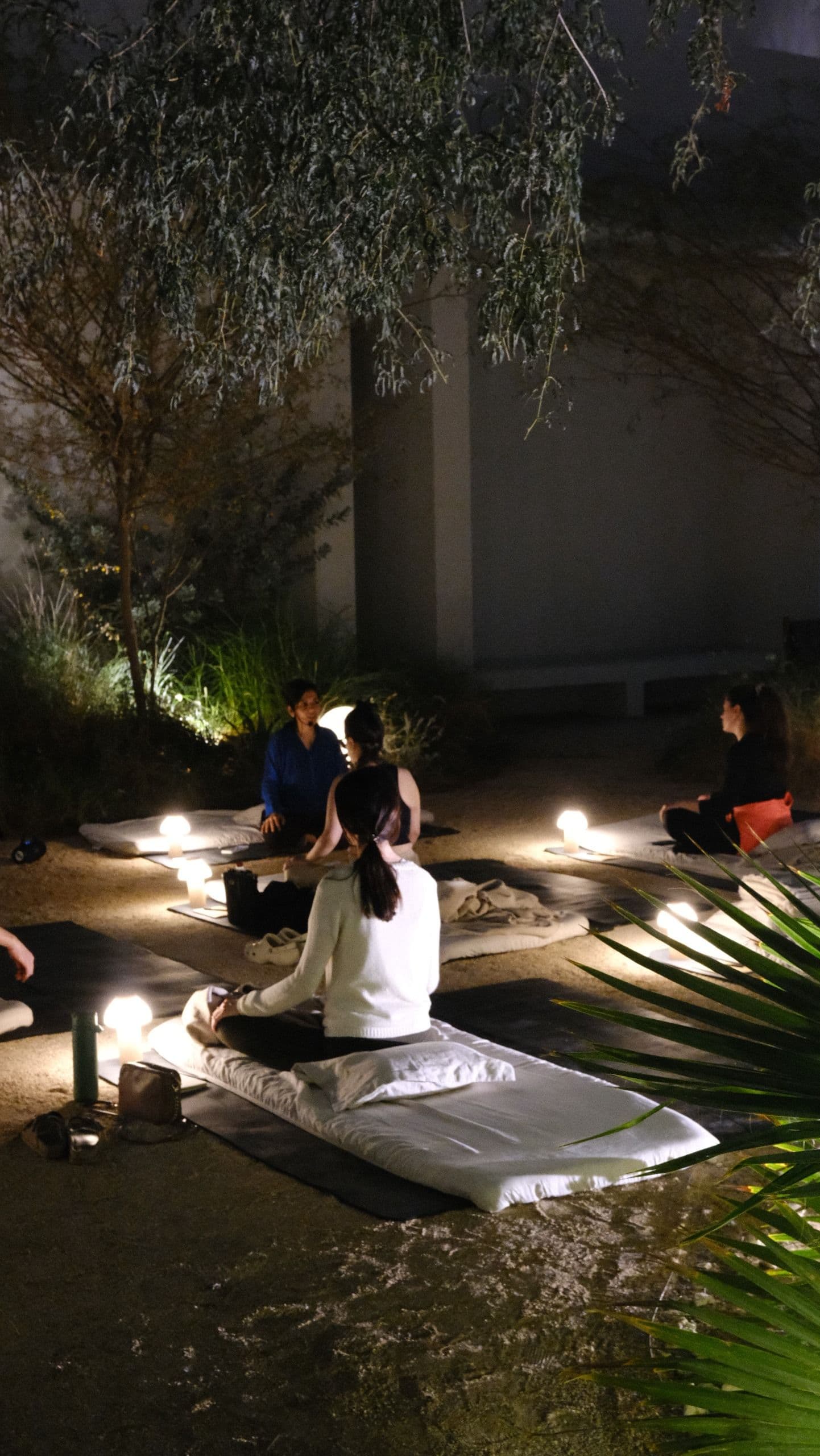
3. There's a tendency in wellness spaces to tell people to avoid movement when something hurts. But experienced instructors often take the opposite approach, working with an injury rather than around it. How do you think about that distinction, and where does motion knowledge become the difference between helping someone heal and setting them back? I think the distinction is incredibly important - working with an injury is not the same as working against it. Knowing the difference requires more than just familiarity with poses and names thereof. It requires knowledge of anatomy, movement and breath, the ability to recognize when something is outside your scope as a teacher and needs the attention of a doctor or another healthcare professional. Working with an injury begins with asking rather than assuming. Asking "What can still move comfortably?”, “What needs more support?”, “Will a variation or a prop make the practice more appropriate?”. Sometimes it also means reassuring someone that it is perfectly acceptable to skip a pose or a class because rest might be the better choice that day. As instructors we should not confuse being able to teach yoga with having the onus of “fixing” someone. Pain is information that shouldn’t be dismissed but we also shouldn’t just assume that every uncomfortable sensation means further damage. This is where movement knowledge becomes important. It allows an instructor to see how an individual holds a pose or moves within it. Are they clenching or collapsing? Are they holding their breath? Are they moving reluctantly? Are they perhaps guarding one side of the body? Observation leads to better guidance. In this context, I think language matters too. An instructor’s language can either build confidence or reinforce a fear of movement. The language used can help the learner remain confident in what their body can do in that moment. This also ties back to the idea of a teaching residency - the more we teach, the more aware we become of these nuances. So, I do not believe the answer is always “stop moving”, and I definitely do not believe it is “push through”. The answer lies in this middle ground, where the instructor observes, acknowledges limits, intelligently adapts, pays attention to the person’s response and refers them onwards if necessary.
4. You sit at an interesting crossroads between the wellness world and health and femtech. What drew you to that intersection, and how did you start thinking about how technology can serve women's health and bodies specifically? At the outset, I don’t think innovation should simply mean building more things that are “nice to have”. Particularly in health and wellbeing, we need to ask whether what we are creating is helping someone understand something, access support, adapt or sustain a better way of living. My experience across design and wellness has trained me to look at both what a person is experiencing and what the systems and services around them are enabling. Navigating what it means to live well in my own life and watching the women around me move through different health needs and life stages has made me increasingly aware of how fragmented women’s healthcare can be. A familiar scenario might look like this - a woman might discuss one set of symptoms with one specialist and another concern somewhere else. She tracks her menstrual cycle in one app, her sleep in another and her medication somewhere else. Then there is the less visible, and frequently overlooked, load of caregiving responsibilities, workplace demands and cultural expectations that also affects her health. Each part is considered separately, if it is considered at all, leaving her to remember, interpret and connect the dots herself. This fragmentation has deeper roots.
Historically, women’s health has been under researched and under funded. Biological sex was not always adequately considered in research design and analysis. Increasingly these gaps are being identified, but the consequences of limited evidence do not disappear overnight. They continue to influence what is studied, how symptoms are interpreted and what kinds of care, products and services are available to women. I think, FemTech, as a sector, is nudging us into thinking about how we can turn these overlooked health needs into tangible, tech enabled solutions through better digital tools, services and perhaps new models of care that address conditions that are unique to women or that affect them disproportionately. Within this context, technology should be designed to support care, clinical expertise or a woman's understanding of her own body. It should ideally be designed to make appropriate care more timely and accessible. That is what drew me to this intersection of wellness, health and femtech - trying to understand what women are experiencing within existing social, economic and cultural frameworks, and then using that understanding to create products and services that are genuinely useful.
5. FemTech is growing fast, especially in the UAE, but there's a strong argument that it still isn't fully optimised for the women it's meant to serve. Where do you see the biggest gaps, whether in how products are designed, what data is being tracked, or how women are actually using these tools in real life?
I think one of the gaps is between how much information products are collecting and how much of it is being interpreted and conveyed in ways that are useful or actionable. Apps and wearables can track cycles, symptoms, sleep, recovery and a growing number of physiological signals. But the quality of interpretation, how it is communicated to the user and its clinical relevance often vary. Showing someone a graph or a correlation is not quite the same as helping her understand what has changed for her and if the change warrants action.
A useful tool should translate insights into practical next steps. These steps could look like better follow up questions, a summary for a clinical appointment, a suggestion for an appropriate change in behavior or perhaps an indication that professional support might be needed. It should offer clearer, more trustworthy pathways from information to understanding and action.
The second gap is continuity. Much of the visible FemTech market still concentrates on specific functions, conditions or life stages. A woman’s health journey is continuous, whereas products and services often divide it into separate categories. Relevant health history should not disappear each time a woman changes providers, switches platforms or moves through a phase of life.
That is not to say that every platform needs to address every aspect of women’s health. But a product should understand where it sits within a woman’s health journey. It needs to ask: Can the information be understood within that context? Can the data be communicated accurately to her (and her clinician)? Does the product identify a concern and then make it clear what the next possible steps are? Does it guide her towards appropriate resources if it identifies a problem that it was not designed to address? Poor interoperability and limited integration with clinical workflows can leave women carrying the burden of connecting the dots themselves.
The third gap, I think, is trust. Digital health solutions often ask women to share personal information about menstruation, sexual health, mood etc. Privacy, transparency and responsible data governance are not separate from good product design. Women should be offered clarity about what is being collected, why it is needed, and where it may travel. If a product repeatedly asks a woman to explain her symptoms in considerable detail, then the value returned should be proportionate to the request being made. There have already been regulatory cases involving fertility and ovulation apps sharing sensitive information with other companies in ways that conflicted with what users had been led to expect.
A good test then might be to examine if the product or service can improve understanding, support a decision or offer a pathway to appropriate support. There is a genuine opportunity to create a more cohesive ecosystem, one where products help women make better use of their information and connect more effectively with clinicians, health services and researchers.
From what I'm seeing, in the local wellness space, there is growing interest in conversations that help women understand hormones, recovery and wearable data. This is incredibly positive, but it also reinforces the existence of the translation gap I mentioned earlier. People have access to more health metrics, but do not always have access to reliable guidance to help interpret those metrics and decide whether they require action.
And so, when you say FemTech isn't fully optimized for women, I think that will happen when products move towards turning data into more credible and actionable insights, when interoperability improves, and when trust is treated as a core design requirement. When we shift from optimizing people to fit tech to optimizing tech to support people - that might be the best way to put it.
6. There can be a real tension between the analogue, embodied nature of yoga and the data-driven logic of health tech. Do you think those two worlds can genuinely complement each other, or does technology risk reducing what is essentially a felt, intuitive practice into something too measurable and transactional?"
I think there is room for the two worlds to complement each other.
Let’s start with interoception, which is our ability to sense and interpret bodily signals like breath, heartbeat, tension, fatigue, discomfort and other internal states. While the evidence is still mixed, recent research suggests that mind-body practices such as yoga may help improve interoception and build body awareness.
Technology can add another layer of information. It can show us patterns that might be harder to notice on our own, whether those are about sleep, recovery or our response to training. These patterns can prompt reflection and perhaps nudge us to adjust behaviours or routines in ways that feel useful.
The trouble starts when the device you bought to manage your stress levels starts causing the stress. Say, for instance, you wake up feeling rested and refreshed, but your wearable reports a poor recovery or sleep score. Suddenly, you might begin to question how you are feeling. This is where technology risks becoming reductive. That metric can add useful context to how you woke up feeling, or it can begin to override your instincts. We are already seeing concerns around this in sleep tracking. There is research being done around ‘orthosomnia’, a term used to describe excessive preoccupation with achieving optimal sleep, sometimes reinforced by wearable data.
Of course, this relationship with data will not look the same for everyone. Some of us actually need data to drive us. We need to see that a practice is having some measurable effect. For others, consistent practice without measuring outcomes is enough. Ultimately, what matters is whether the person is getting better at understanding their body and rhythms, and regulating and responding to what they notice.
The paradox of self tracking technology is that while it promises greater self-knowledge and autonomy, it can also encourage us to outsource parts of self-regulation to technology, or to become overly focused on regulating ourselves through numbers. Useful tech should be able to tell us that something has changed and draw our attention to it, as opposed to “this number here is exactly how well you are doing”. The healthiest relationship between the two worlds, digital and analogue, might be one where technology acts as the cue and not the verdict.
7. Tell us about your experience at Paus. What was it that drew you there, what did that environment teach you, and how has it influenced your approach to teaching and to the broader conversation around wellness?
I started teaching at Paus before they moved to the new space. Sarah Pasha reached out to collaborate and we had the nicest conversation about yoga and art belonging in the same space. We’ve been teaching Slow Sessions at Paus together since.
This may sound very cliche but it’s true - it’s the people, the vibe and the vision that drew me to Paus. You can tell that Paus started from something personal. In fact, you can feel it. They have very thoughtfully curated and created a beautifully balanced space for people to find what “living well” means to them.
The environment reminded me of something I already believed to be true i.e. wellness does not have to mean one thing. It can be a class, a conversation, a meal, a quiet corner, a person who remembers your name, or just being in space that makes you feel a little more like you that day. We all need support, but what support looks like can change depending on where we are in our lives, or even in our day.
Being in that environment is a nice reminder of what I already believe - that products, practices and spaces shouldn’t be designed to tell people that they need “fixing” or offer “a quick fix”. Instead, they should be designed to support people in a way that fits into their lives.
The broader conversation around wellness can sometimes become very individualistic - your routine, your healing, your data. While that has a place, I think wellbeing also has a collective element we sometimes forget. We need people, spaces and communities that guide us, support us and remind us that figuring out ‘better living’ is not something we are meant to do alone.
8. If you could redesign how women are taught to relate to their bodies, through movement, through health tools, through the stories wellness culture tells, what would you change first?
I think very often women are implicitly taught to relate to their bodies as something that needs constant judgment and correction. And this happens before they are taught to understand their bodies.
There is research being done on how a woman’s relationship with her body is in part shaped by social experiences, discourse and relationships. The social environments and cultural noise that we unwittingly surround ourselves with which can make us question how we look and whether we fit an ideal or the “correct” way to look.
The narrative needs to shift from this norm to one where women are taught to understand their own bodies, identify what it needs and feel confident enough to seek the support. And this can be done using the things you mentioned - movement, health tools and the stories wellness culture tells.
Let’s start with movement. Movement should not be another way to judge or reshape the body, it should be a way to experience what your body can do for you. That means identifying its limitations but also appreciating what it does. A growing number of studies are exploring functionality appreciation, an idea adjacent to this, which refers to appreciating and respecting the body for what it is able to do and not just how it looks. This loosely ties back to an idea we talked about earlier - the language an instructor uses during a movement or mindfulness class, how it’s tailored, can either build confidence or reinforce false beliefs.
Second, women need a stronger understanding of their bodies, better health literacy and communities where this discourse can happen. WHO's work on health literacy makes the same point on a broader level, that people need to be able to do more than just access information, they need to be able to understand, appraise and use it. This circles back to a lot of what our conversation has been about. Health tools can support this shift by making information more reliable and actionable. Wellness culture can move to being about knowledge, conversation and community.
This is not to say that we need to wake up tomorrow and make "loving our bodies everyday" a new metric to optimize. But “redesigning” movement practices, health tools and wellness culture to support and guide women might be a good place to start.